
Aesthetic clinic CRM vs a regular CRM: 7 differences
Many clinics try a sales CRM and find it does not fit: no packages, no allergy field, no Zalo. This guide compares an aesthetic clinic CRM with a regular CRM on 7 points, so you can tell which one your clinic needs.
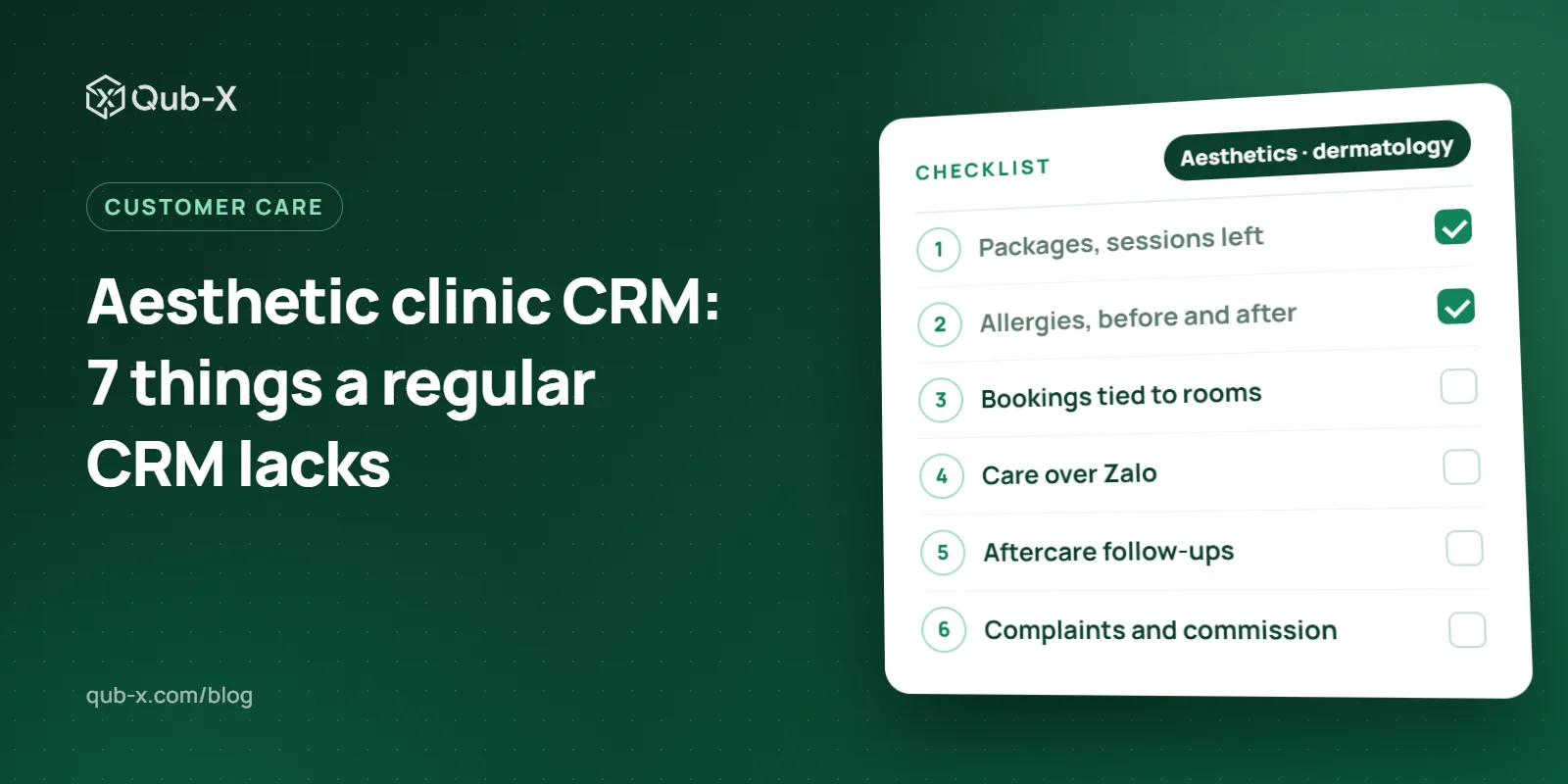
An aesthetic clinic CRM differs from a regular CRM because it manages clients the way a clinic actually works: by treatment package and sessions left, with medical notes, allergies and before-and-after photos, bookings tied to rooms and machines, care over Zalo, aftercare follow-ups, complaints, balances and therapist commission. A regular CRM is built for sales teams, so it manages deals and email. This guide compares the two kinds of CRM on 7 points, so you can tell which one your clinic needs.
How does a regular CRM differ from an aesthetic clinic CRM?
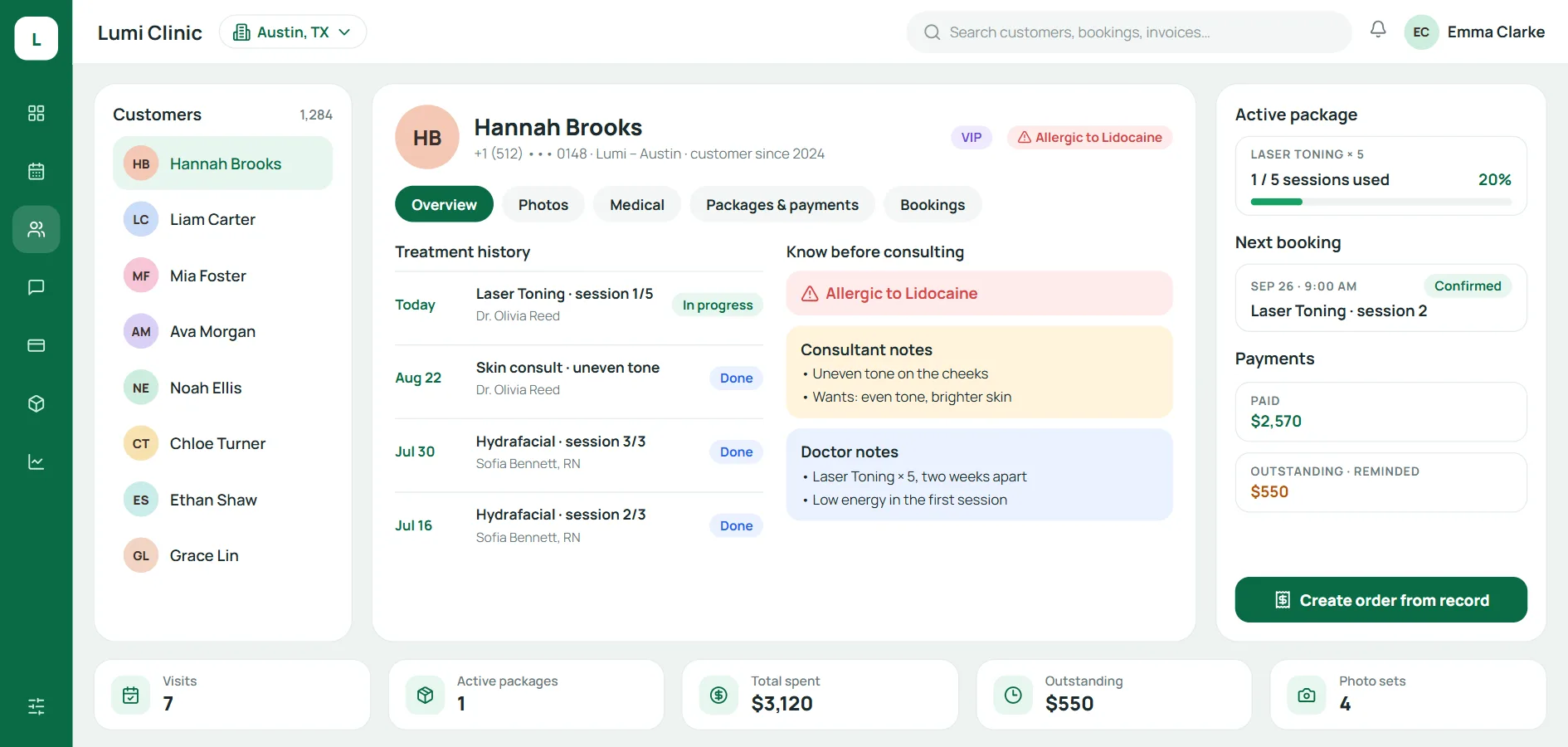
CRM (customer relationship management) is the umbrella name for any software that stores client information. But most CRMs on the market are designed for sales-led businesses: a client is a "deal" that moves through quote and close, and then the process ends. In an aesthetic clinic, closing the sale is only the start: a client buys a 10-session package, comes back regularly for months, and every visit needs their skin condition, allergies and sessions left.
Point | Regular CRM | Aesthetic clinic CRM |
|---|---|---|
What it manages | Deals, quotes | Packages, sessions left, prepaid cards |
Client details | Contact, company, purchase history | Plus allergies, doctor notes, before and after photos |
Calendar | Meetings, tasks | Bookings tied to rooms, beds, machines and staff |
Care channel | Email, phone | Zalo, Messenger and the channels clients use |
After the sale | Process ends | Aftercare follow-ups by service group |
Complaints | Generic support tickets | Complaint tickets tied to the service, doctor and next visit |
Money | Sales figures, sales commission | Balances, prepaid cards, therapist commission per order |
A regular CRM can be enough for a clinic that mostly sells products rather than treatment packages. If revenue comes from packages and returning clients, the differences below show up every day.
1. Manage packages, not "deals"
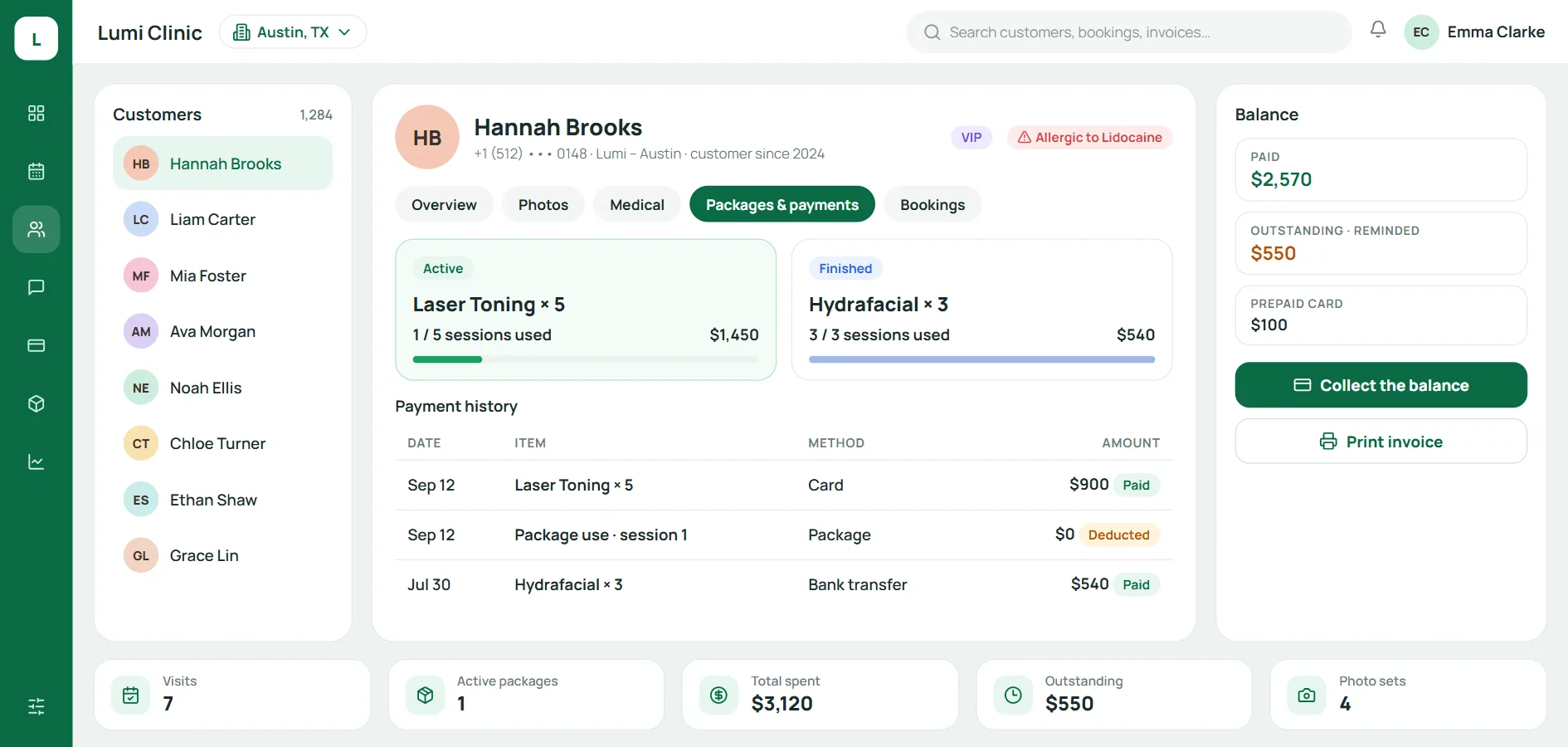
The question the front desk hears most in a clinic is "how many sessions do I have left?". A regular CRM has no idea of sessions, so the clinic keeps them in a spreadsheet, and sooner or later the two disagree.
A CRM built for clinics should store packages by session or by shot, deduct a session when a service is completed, and show how many are used, how many are left and when they expire. Prepaid cards need bonus value and an expiry date. When a client wants to pass sessions to a family member or get a refund for what is unused, every change should leave a trail on the record.
2. A record with a medical side: allergies, doctor notes, before and after
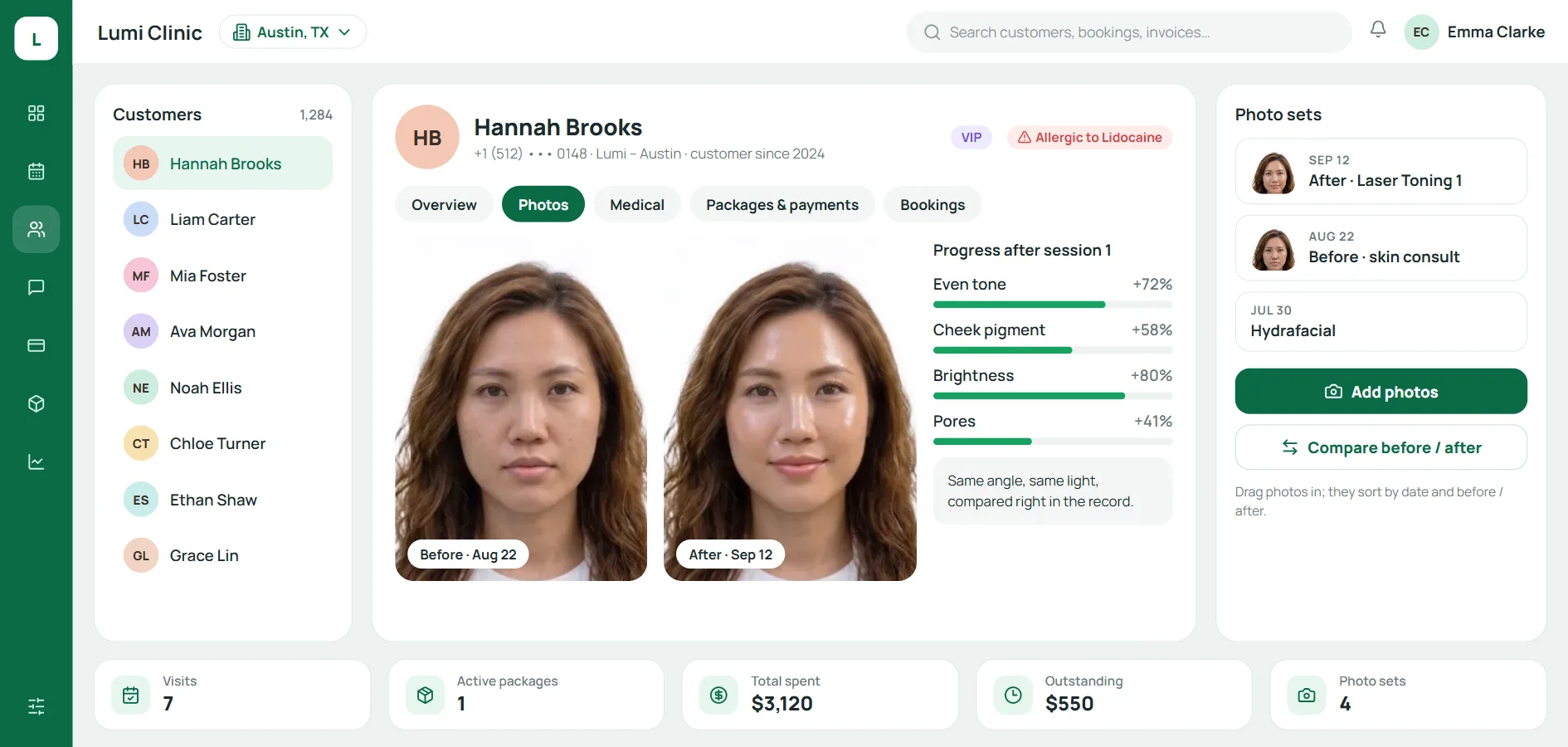
In aesthetic treatments, client information is more than a name and phone number. Therapists need to know which anaesthetic a client reacts to, what medication they take, and what energy setting was used last time. Doctors need the previous photos to judge progress.
A clinic CRM puts allergies and contraindications at the top of the record, keeps consultant notes apart from doctor notes for each visit, and stores before-and-after photos per treatment. This part also needs permissions by role: the front desk should not be able to open medical records. Bringing scattered details into one record is covered in customer records management.
3. Bookings tied to rooms, machines and the client's package
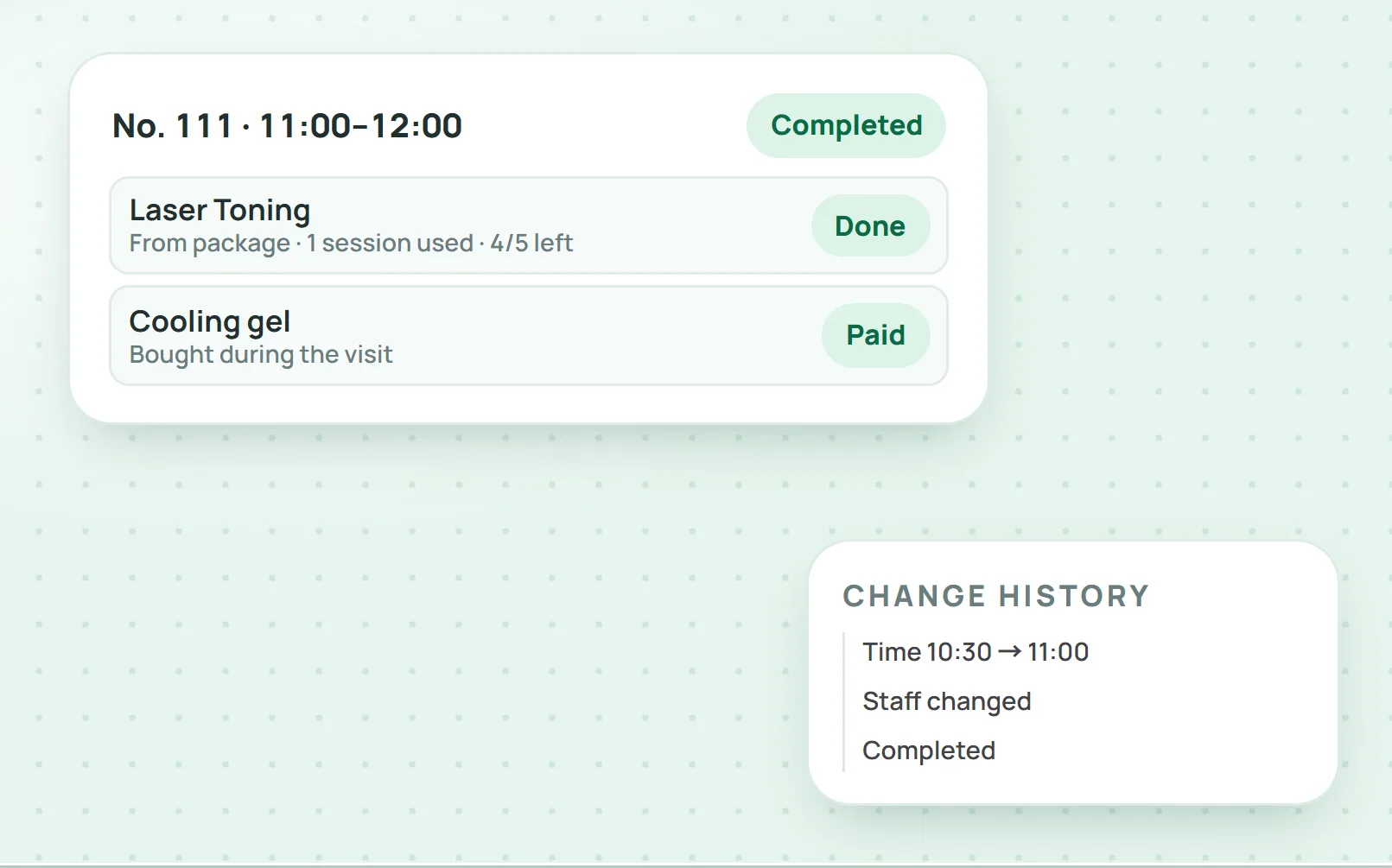
In a regular CRM, the calendar holds a salesperson's meetings and tasks. In a clinic, the booking is the centre of the working day: it takes a room, a bed or a machine, belongs to a doctor or therapist, and deducts a session from the client's package when it is completed.
So the booking page should show the package sessions left, doctor notes, the order and the amount paid, and every change of time or staff should go into a history. One shared calendar for rooms, beds and machines is covered in aesthetic clinic scheduling software.
4. Care over Zalo and Messenger, not email
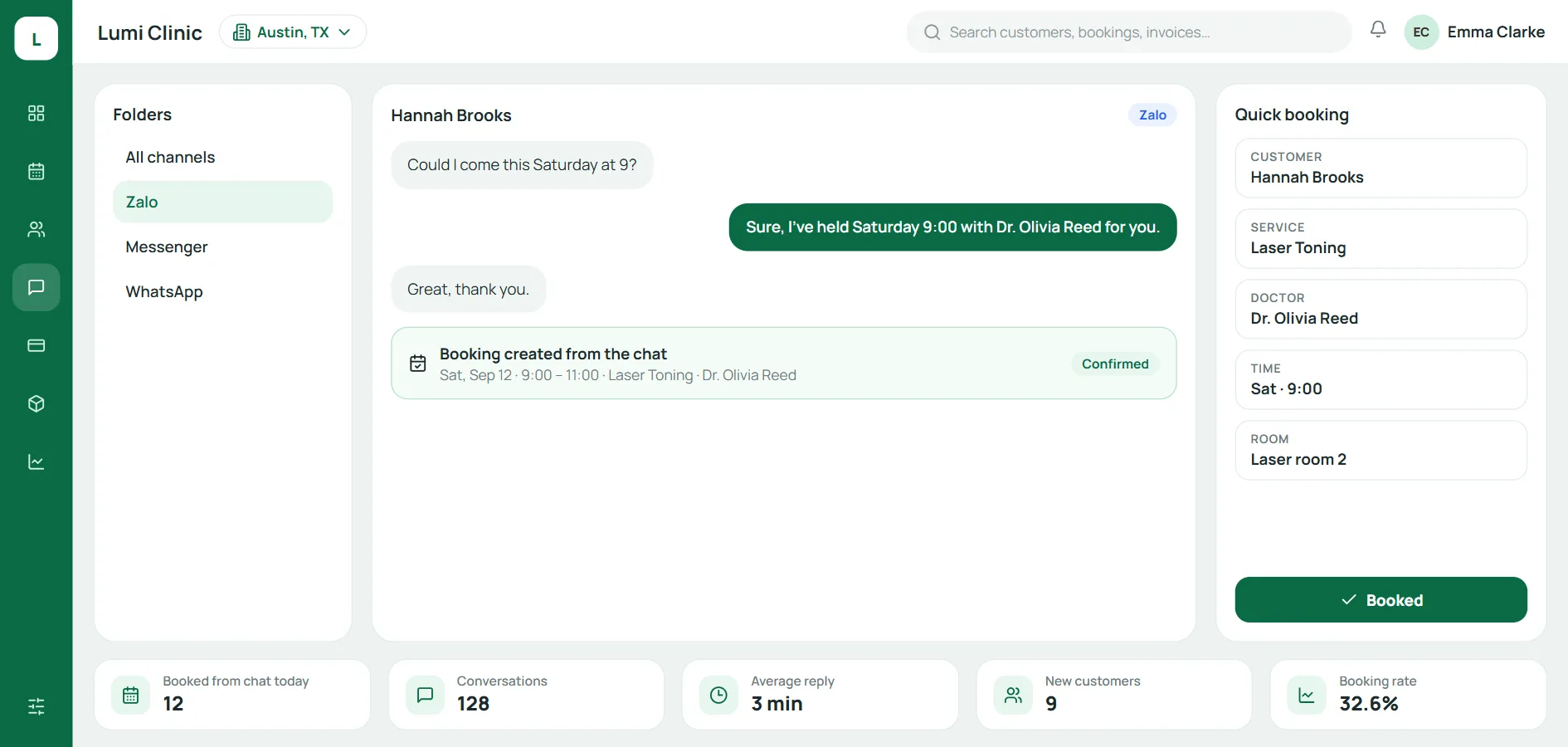
A regular CRM is strong on email: campaigns, automated sequences, quote templates. Clients in Vietnam rarely read email; they message on Zalo, Messenger and Instagram. A client record that is not linked to those chats misses the most important part of the relationship.
A clinic CRM should bring every channel's messages into one inbox linked to the client record, so consultants see the treatment history the moment a client writes, and can book inside the chat. See also aesthetic clinic online booking and the multichannel inbox.
5. Aftercare follow-ups by service group
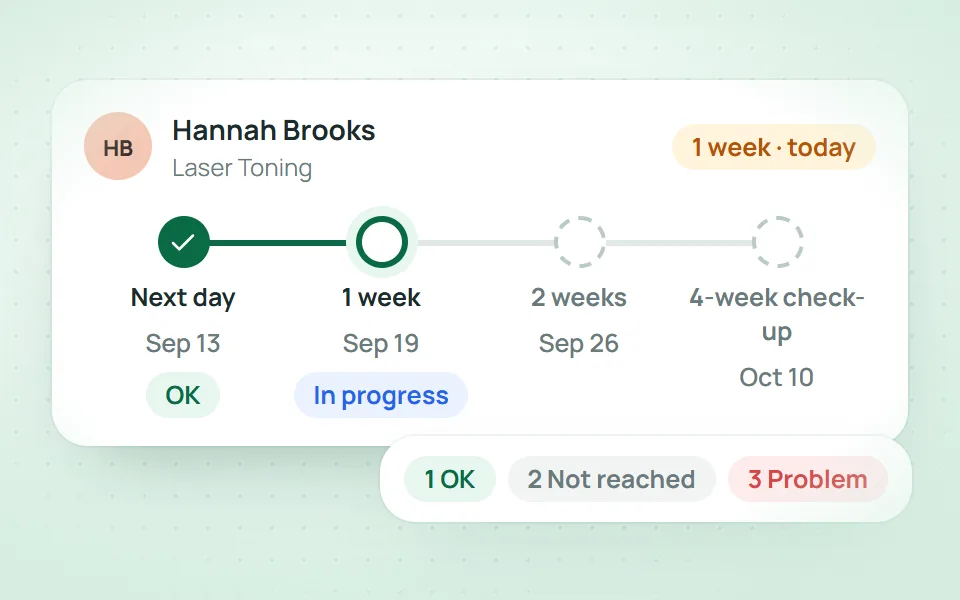
In a sales CRM, the process ends once the deal is closed. In a clinic, the days after a treatment decide whether the client returns. Each service group needs its own follow-up plan: after laser, check in the next day and after a week; after injectables, book a review.
Software should create the follow-up points automatically when a service is completed, put clients with allergies or problems first, move an unanswered call to the next day, and save the outcome on the record. What brings clients back a second time is covered in customer retention.
6. Complaints tied to the service, the doctor and the next visit
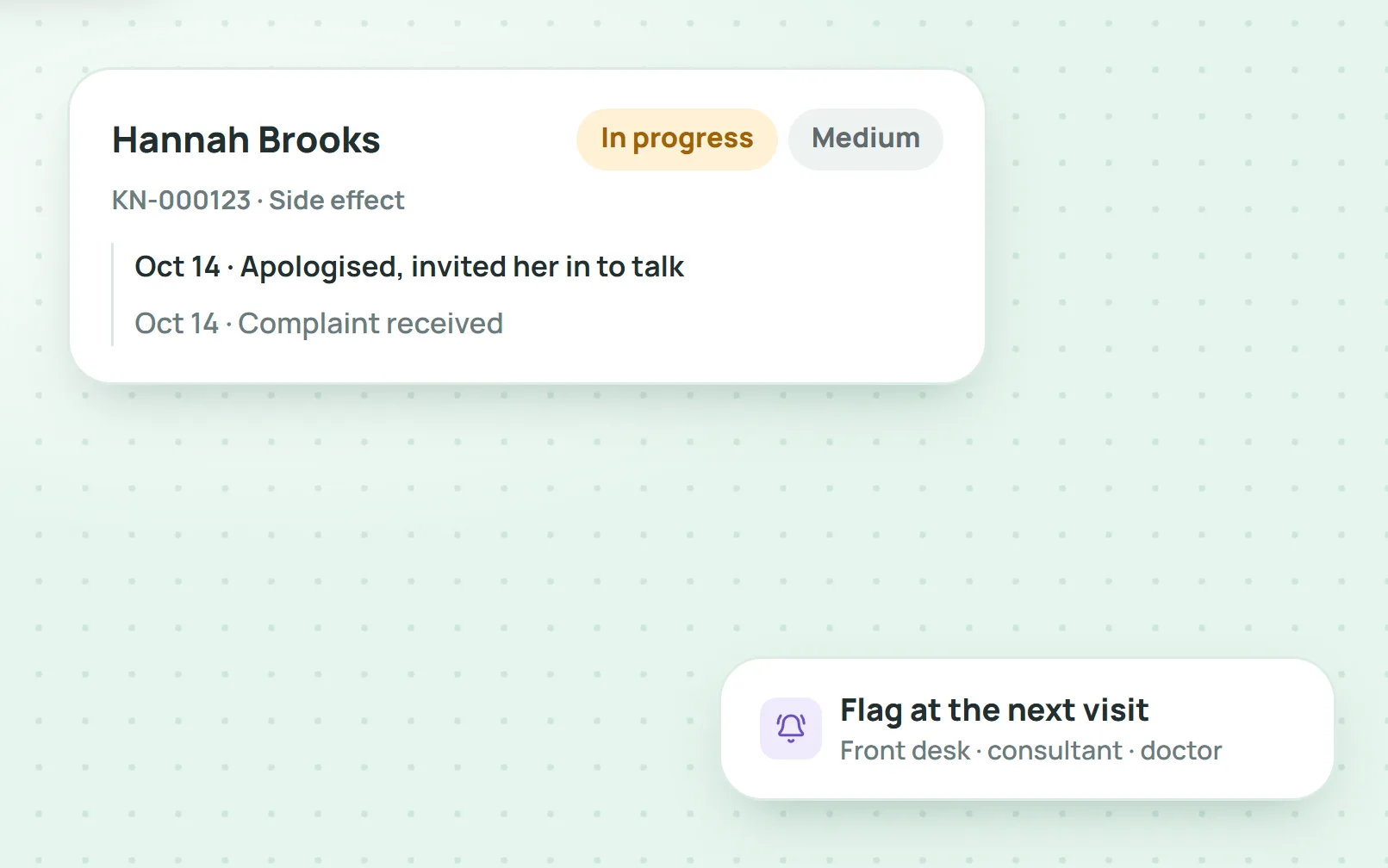
Complaints in aesthetics usually concern a specific service and the person who performed it, and can affect the client's health. A regular CRM's generic support ticket is not enough.
A clinic complaint ticket should record the type, severity, service, doctor and owner, with a handling timeline. Above all, when the client comes back, the front desk, consultant and doctor should all be reminded that this client complained before, so nobody makes things worse by accident.
7. Balances, prepaid cards and therapist commission
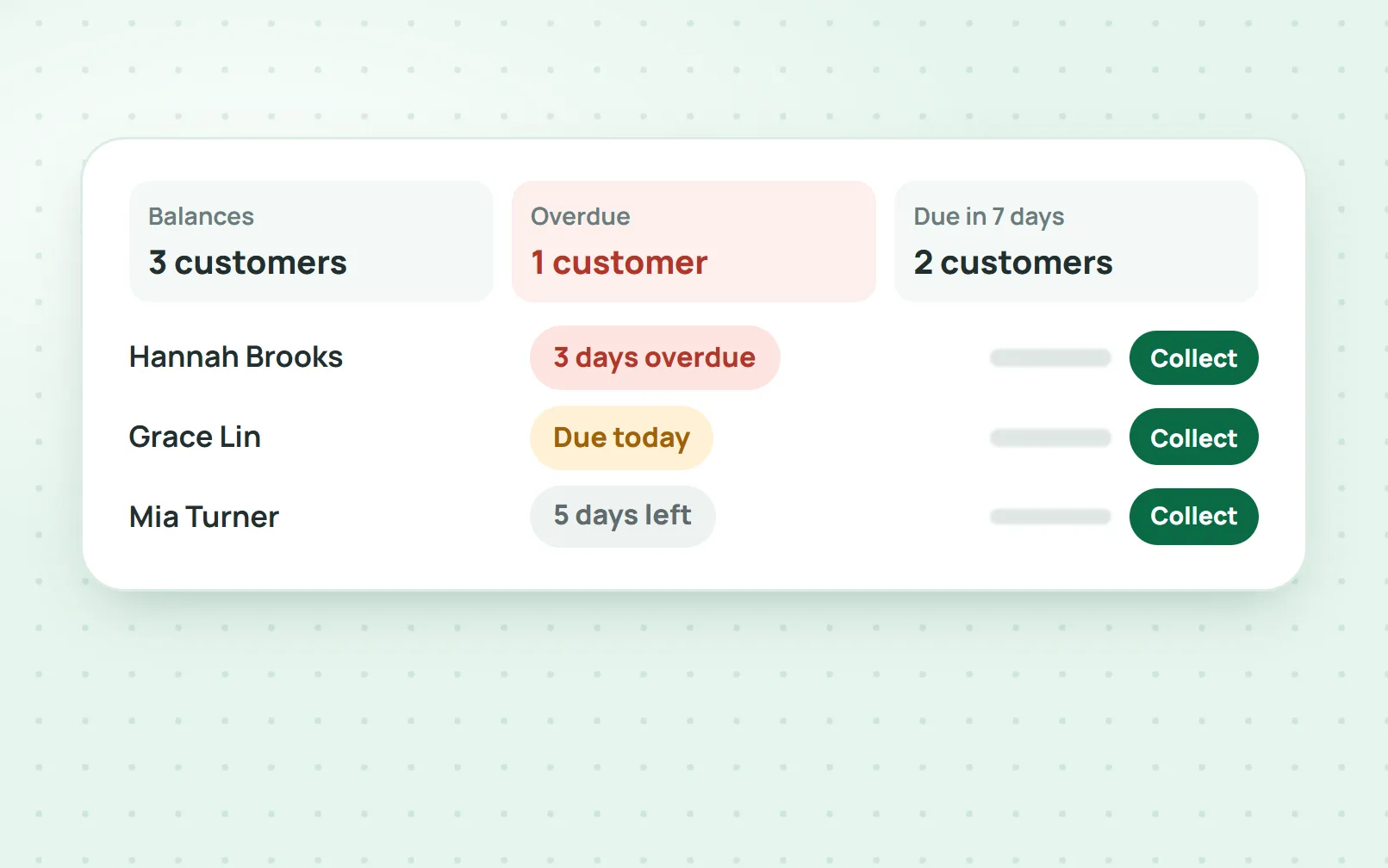
Clients often pay in part, pay for a package in instalments, or use a prepaid card. A regular CRM records sales when a deal closes, so it cannot answer "how much does this client still owe, and when is it due?". A clinic CRM should keep a balance for each client, with a due date and an overdue warning, and let staff collect the rest from the record.
Commission works differently too: in a clinic it goes to the therapists and consultants who perform and sell the service, calculated on money actually collected for each order, and several people can share one order. The details are in how to calculate aesthetic clinic therapist commission.
Moving over from spreadsheets or an old CRM
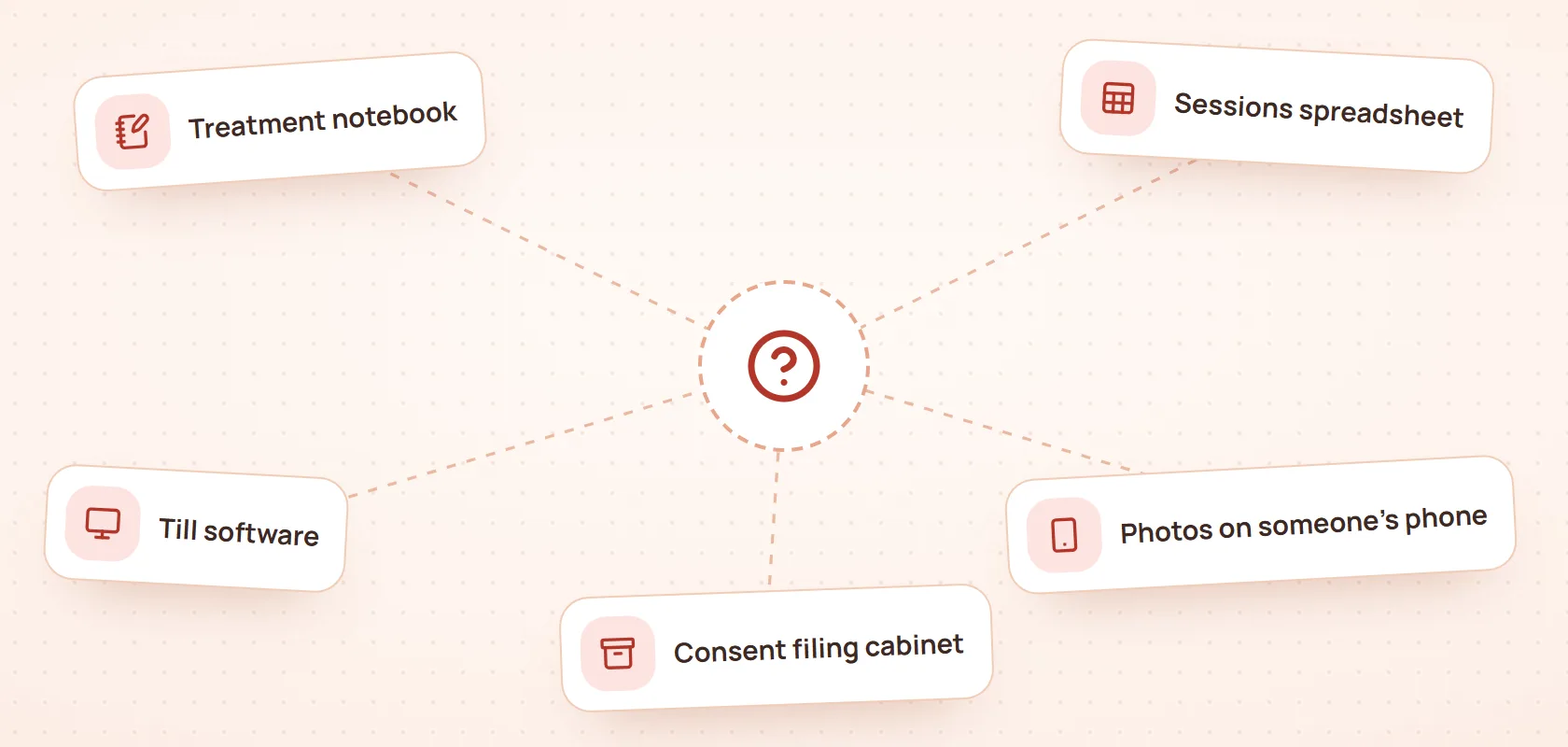
Switching software does not have to happen all at once. A sensible order:
Clients mid-package: packages, sessions left, expiry dates, balances.
Safety information: allergies, contraindications, current medication.
Clients who returned in the last 6 months.
Before-and-after photos of clients still in treatment.
Older clients, moved over as they come back.
A 30-day plan for bringing client data into one place is in customer records management. If you are comparing several products, clinic customer management software lists 8 core features to check.
How Qub-X works as an aesthetic clinic CRM
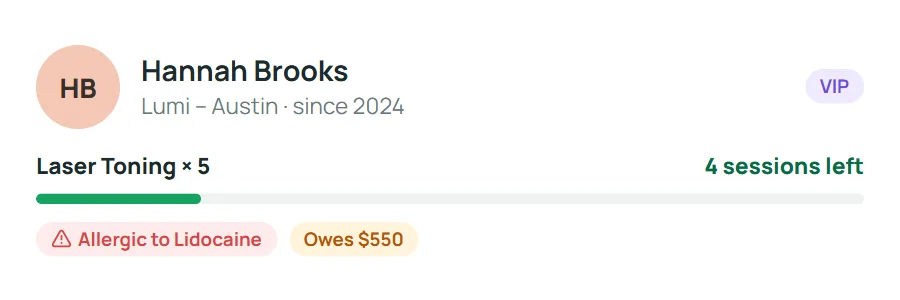
Qub-X is aesthetic clinic management software for aesthetic and dermatology clinics, built around the client record:
One record with active packages and sessions left, treatment history, invoices and balances, conversations from every channel and upcoming bookings; search by name without diacritics, phone or client code; duplicates merged.
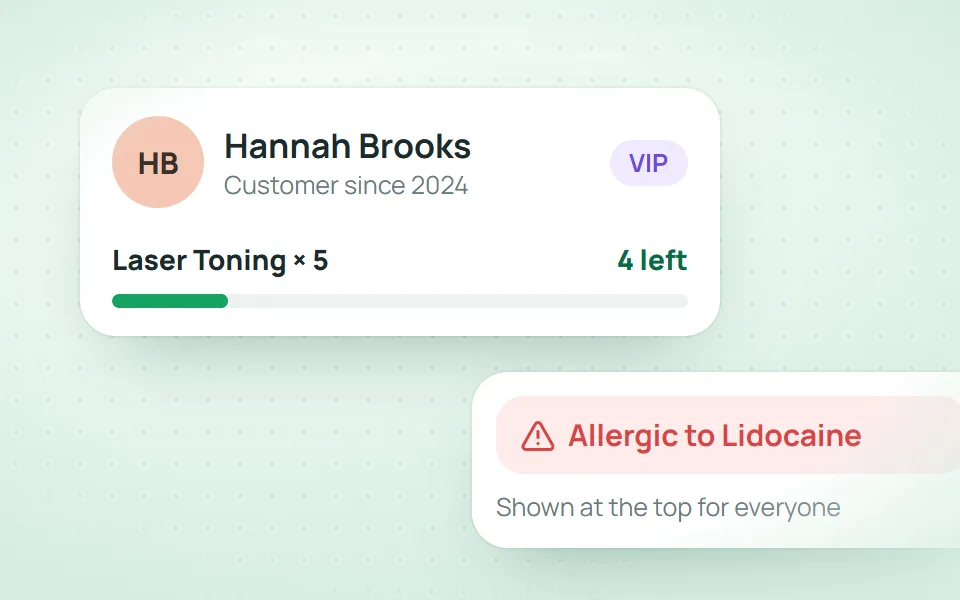
Allergies, open complaints and notes for the next visit at the top of the record; before-and-after photos per treatment; consultant and doctor notes kept apart.
Packages by session or by shot, with a session deducted when a visit is marked done; prepaid cards with bonus value and expiry; session transfers to another client and refunds with approval steps.
Follow-up points created automatically by service group; staff copy a template message to Zalo and the result is saved on the record.
Complaint tickets with a code, severity, service and doctor; the whole team is flagged at the next visit.
Commission attached to each order and calculated on money actually collected; access to records by role and branch.
Qub-X runs at an aesthetic clinic chain with 3 branches, about 500 staff and more than 3,500 bookings a month.
Frequently asked questions
Should a clinic using a sales CRM switch? Consider it if most revenue comes from treatment packages. When sessions, allergies or balances have to be tracked in a spreadsheet on the side, that CRM is not enough.
Can a client pass remaining sessions to a family member? In Qub-X, yes. The order gets a session-transfer line, the recipient gets a new session card with the same service and expiry, and the card history shows who received it.
Can the front desk see a client's medical record? It depends on permissions. Record access is set by role and branch, so a clinic can let the front desk see only bookings and payments.
Does the software flag clients who have complained before? Yes. Open complaints show at the top of the record, and the front desk, consultant and doctor are flagged at the client's next visit.
Conclusion
An aesthetic clinic CRM does not have more features than a regular CRM; it has the ones a clinic uses every day: packages, medical notes, room-based bookings, Zalo, aftercare, complaints and commission. List everything your clinic tracks outside its current CRM. Book a Qub-X demo to see the client record on your clinic's own workflow, or try it for 7 days.
Related articles
All articles on Customer care- Customer care
Post-Treatment Customer Care Process: 6 Steps and Sample Messages
A post-treatment customer care process for aesthetic clinics: 6 steps on a clear timeline, with a sample message for each step and tips for making the process run on its own.
- Customer care
Customer Segmentation in a CRM: 5 Groups and How to Look After Each One
Sorting clients into 5 groups along their journey tells your aesthetic clinic who to contact today. Includes grouping rules, what to do for each group, and 3 metrics to track results.
- Customer care
Staff Not Using the CRM After You Bought It? 7 Reasons and How to Fix Them
Staff not using your CRM is usually a rollout problem, not a software problem. Here are 7 common reasons in aesthetic clinics, the warning signs, and a 30-day plan to get the whole team on board.