
Aesthetic clinic management software: 12 criteria for choosing in 2026
A licensed aesthetic or dermatology clinic should not choose software the way a spa does. 2026 brings an electronic medical record deadline, mandatory e-prescriptions and a new personal data law. Here are 12 criteria to get the choice right first time.
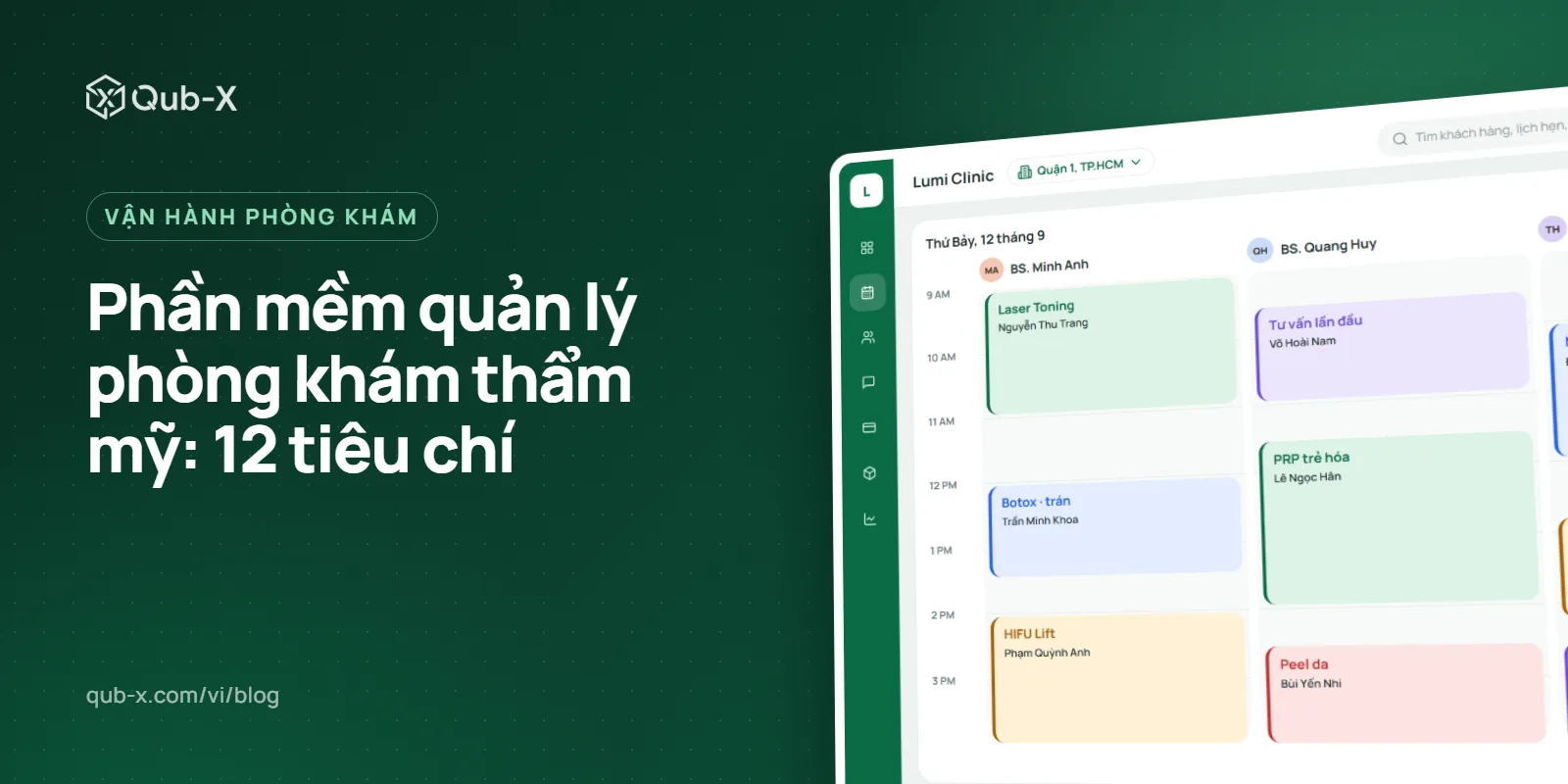
Aesthetic clinic management software (often simply called clinic management software) is a system that brings customer records, appointments, treatment packages, payments and medical records for an aesthetic or dermatology clinic into one place, while meeting the specific rules that apply to licensed medical facilities in Vietnam. In 2026 those rules change a lot: non-hospital facilities must complete electronic medical records by 31 December 2026, e-prescriptions have been mandatory for clinics since 1 January 2026, and the Personal Data Protection Law took effect on the same day. This guide is for clinic owners and managers who are choosing or replacing software: 12 criteria to check, the questions to ask during a demo, and how to roll out in time.
How is choosing software different for an aesthetic clinic than for a spa?
Many clinics start with spa management software because the interface feels familiar and the price is easy to accept. That works while the clinic is small, but it breaks down as soon as the business has to meet the obligations of a licensed medical facility. The table below sums up the differences that decide how you should choose.
Topic | Spa or beauty salon without a medical licence | Licensed aesthetic or dermatology clinic |
|---|---|---|
Services allowed | Skin care, relaxation, non-invasive services | Invasive procedures within the scope of the licence |
Customer records | Information form, service history | Medical records; electronic medical records required by 31/12/2026 |
Prescriptions | None | Electronic prescriptions sent to the National Prescription System |
Health data | Possibly (allergies, skin photos) | Certainly, and it is sensitive personal data |
Record retention | Set by the business | Outpatient records 10 years, cosmetic surgery records 20 years |
Under Decree 96/2023/ND-CP (Article 40.12), invasive cosmetic services may only be performed at hospitals or clinics with the right professional scope. So if your clinic offers laser, injections, deep peels or minor surgery, the software has to meet the standard of a medical facility, not that of a spa. If you run a spa without a medical licence, our guide to spa management software is a better fit.
12 criteria for choosing aesthetic clinic management software
The twelve criteria fall into three groups. Medical compliance is non-negotiable: software that fails this group will have to be replaced before the end of the year, however cheap or polished it is. The other two groups decide whether the software actually helps the clinic run better or just adds one more place to type data in.
Group 1: Medical compliance (4 criteria)
Criterion | Why it matters | What to ask during the demo |
|---|---|---|
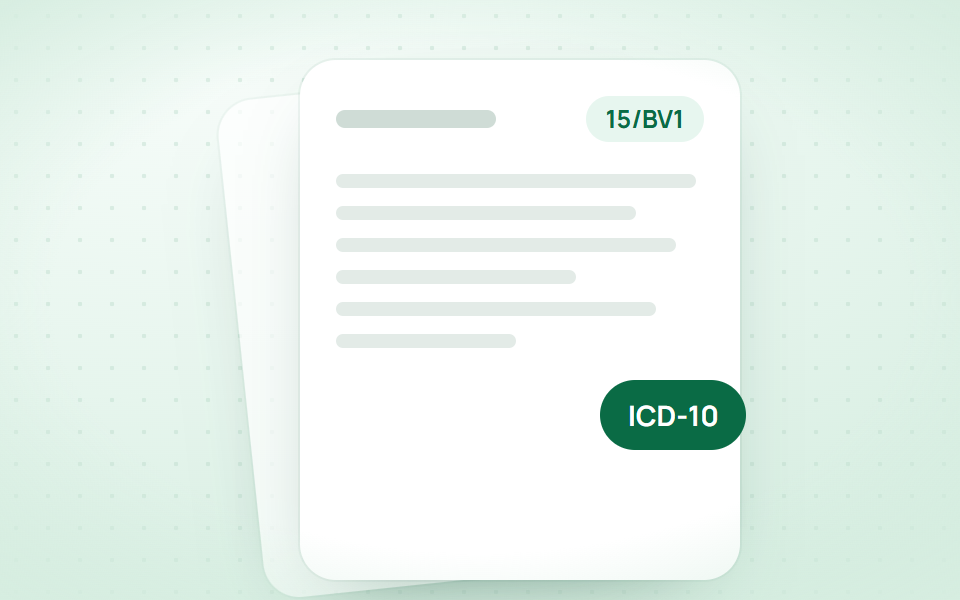
1. Electronic medical records in the right format | Circular 13/2025/TT-BYT requires non-hospital facilities to complete electronic medical records by 31/12/2026 | Do outpatient records follow form 15/BV1? Are diagnoses coded with ICD-10? Can records be printed or exported as PDF? |
2. Connected e-prescriptions | Circular 26/2025/TT-BYT required clinics to prescribe electronically before 01/01/2026 and to send prescriptions to the National Prescription System | When is each prescription sent to the national system? Are failed submissions kept and retried? |
3. Electronic confirmation with an edit trail | Medical records are signed or confirmed by electronic signature, biometrics or another electronic method allowed by law | After a record is confirmed, how is it corrected? Are the old version and the reason for the change kept? |
4. Retention for the full period, with recovery | Circular 33/2025/TT-BYT sets 10 years for outpatient records and 20 years for cosmetic surgery records | Where is data backed up, and how often? If you stop using the software, can you export every record? |
Group 2: Data and security (3 criteria)
Since 01/01/2026, the Personal Data Protection Law 91/2025/QH15 and Decree 356/2025/ND-CP have been in force. A customer's health information is sensitive personal data, so the clinic must be able to show who viewed it and who changed it.
Criterion | Why it matters | What to ask during the demo |
|---|---|---|
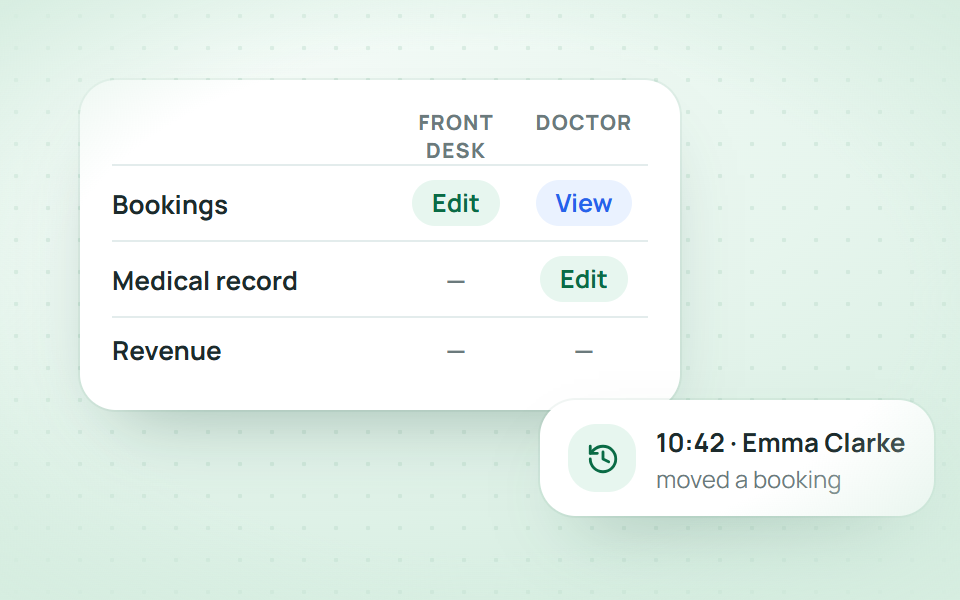
5. Permissions by role and branch | The front desk needs appointments, not medical records; doctors need medical records, not revenue | Log in with a front desk account: can you see doctor's notes and treatment photos? |
6. Access log | After a data incident, the clinic must know who viewed, edited or exported a record | Does the log record views as well as edits? How long is it kept? |
7. Recorded customer consent | Processing sensitive data and using before-and-after photos requires the customer's consent | Can consent forms be signed on a tablet and saved straight into the customer's record? |
Our article on customer data security and permissions for aesthetic clinics explains the obligations under the new law and how to design permissions in detail.
Group 3: Operations and business (5 criteria)
This group is what separates aesthetic clinic management software from general clinic software. A general clinic revolves around visits; an aesthetic clinic revolves around long-term customers, multi-session treatment packages and consultations.
Criterion | Why it matters | What to ask during the demo |
|---|---|---|
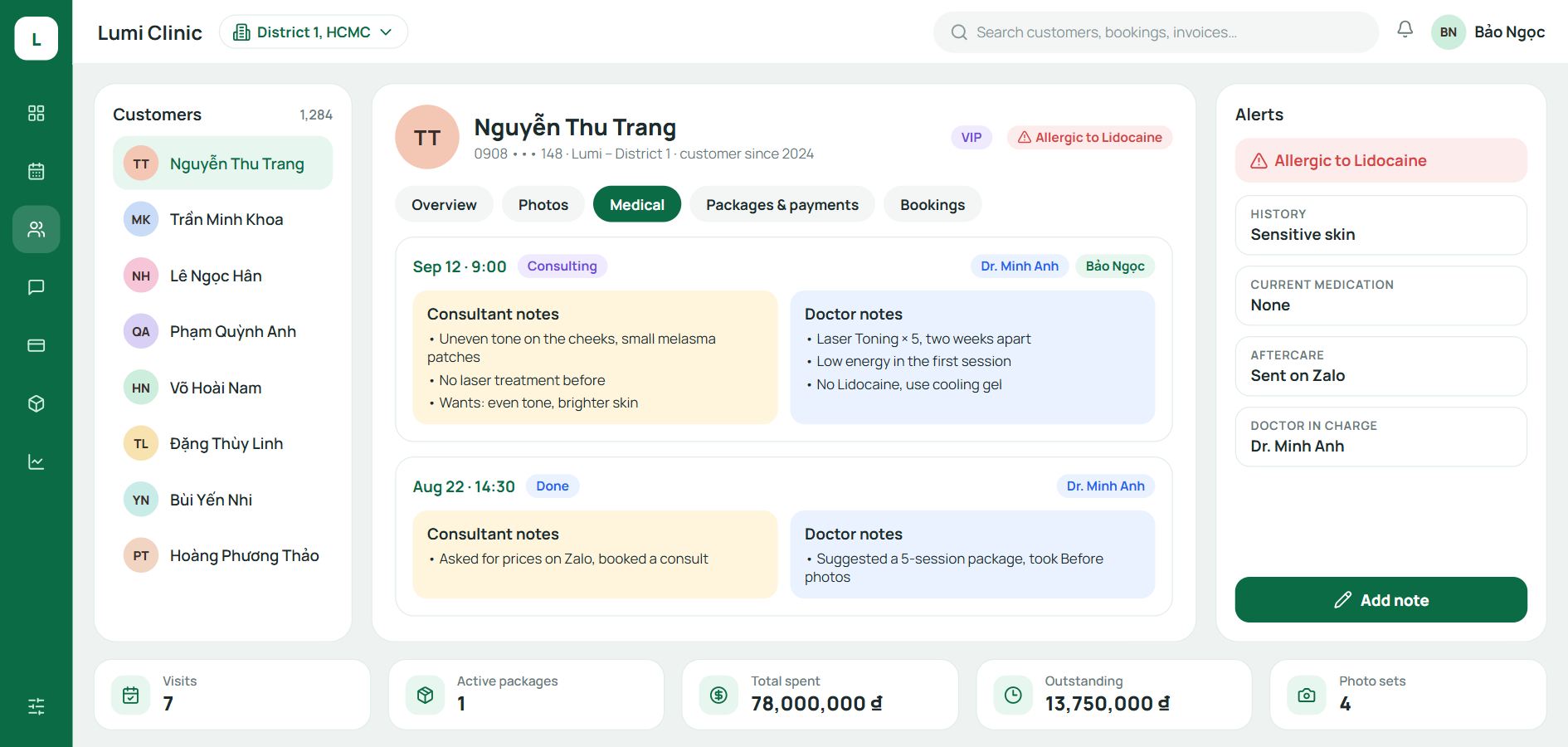
8. One record for consultants and doctors | Customers don't have to repeat their history; doctors see what the customer wants, consultants see the doctor's instructions | Are consultant notes, doctor notes, allergies, photos and active packages all on the same record? |
9. Treatment packages, prepaid cards, balances | Most of an aesthetic clinic's revenue comes from multi-session packages | Are sessions deducted automatically when a treatment is completed? If a customer pays for a package in installments, where does the balance show? |
10. Scheduling by doctor, room and machine | Laser machines and procedure rooms are the most expensive resources | Does it block double-booking of doctors, rooms and machines? Can you reschedule by drag and drop? |
11. Aftercare and reminders | Customers who are reminded at the right time come back on schedule | Are aftercare messages and appointment reminders sent through Zalo OA automatically and saved in the record? |
12. Reports by branch and by person | Owners need real numbers every week, not at month end | Is revenue counted on cash actually received or on invoices? Is commission tracked per doctor and consultant? |
If your clinic has several branches, also check whether customers who visit another branch share the same record and packages, and whether every branch calculates metrics the same way. Our article on 7 spa management KPIs suggests the numbers worth reviewing every week.
Online or on-premises clinic management software?
Many clinic owners still weigh cloud-based (online) software against software installed on a server at the clinic (on-premises). There is no right answer for everyone; the table below compares both on the same criteria.
Criterion | Online (cloud) | On-premises |
|---|---|---|
Access from several branches | Built in, needs only an internet connection | Needs a dedicated network between branches |
Backup and recovery | Handled by the vendor; ask how often and where | Handled by the clinic, which carries the responsibility |
Updates for new regulations | Rolled out to everyone at once | Must be installed on each machine |
Upfront cost | Low, paid monthly or yearly | High (server, licences), plus separate maintenance |
When the internet goes down | Needs a backup plan | Keeps running on the local network |
Given the requirements for backup, data recovery and connection to national systems, most small and mid-sized clinics will find online software easier to keep compliant. Whichever you choose, ask the vendor to commit in writing to where your data is stored and how you can export all of it if you stop using the service.
A rollout plan that meets the 31/12/2026 deadline
From early October to 31/12/2026 there are about 12 weeks. The plan below assumes the clinic has chosen its software within the first two weeks.
Weeks 1–2: Choose the software. Run demos against the 12 criteria above and trial a real journey: from a price enquiry message to a treatment session and a prescription.
Weeks 3–4: Set up the foundations. Enter services, treatment packages, staff and role-based permissions. Issue the facility's own rules for managing and securing its electronic medical records.
Weeks 5–8: Run in parallel. Every new visit goes through the software; paper records are used only for customers already partway through treatment. Log issues and resolve them each week.
Weeks 9–10: Bring in existing records. Start with customers on a treatment package, customers with an outstanding balance, and customers with allergies or special notes.
Weeks 11–12: Check and complete. Review electronic confirmations, backups and access logs; retrain each role before retiring the old process for good.
Our article on electronic medical records for aesthetic clinics explains who must implement them, the penalties and the preparation steps in detail. To standardise your process before moving it onto software, see the 7-step aesthetic clinic operations process.
Qub-X for aesthetic and dermatology clinics
Qub-X is built for spas, beauty salons and dermatology clinics: one customer record shared by consultants and doctors, scheduling by doctor and room, treatment packages, prepaid cards, a Zalo and Facebook inbox, commission and branch-level reporting. The electronic medical records module under Circular 13/2025 (form 15/BV1, ICD-10, electronic confirmation, connected e-prescriptions) is coming soon. You can try it free for 14 days on your clinic's real workflow before you decide.
Frequently asked questions
Does a spa or beauty salon need clinic management software?
No, if the spa or beauty salon has no medical licence and does not perform invasive services. In that case, beauty salon or spa management software needs to handle customer records, appointments, treatment packages and payments well; the obligations for electronic medical records and e-prescriptions apply to licensed medical facilities. If the salon runs a licensed clinic alongside it, choose one system that meets all 12 criteria above for both.
How is aesthetic clinic management software different from general clinic software?
General clinic software revolves around visits, lab tests and health insurance. Software for aesthetic and dermatology clinics also needs multi-session treatment packages, before-and-after photos, consultation notes, prepaid cards and commission per person, alongside medical records and e-prescriptions.
Do dermatology clinics have to use electronic medical records?
Yes, if the clinic is a licensed medical facility. Under Circular 13/2025/TT-BYT, facilities other than hospitals must complete their electronic medical records rollout by 31 December 2026.
How much does aesthetic clinic management software cost?
Each vendor prices differently: per branch, per user account or by feature tier. Ask for a quote covering the total first-year cost, including setup, data migration, digital signatures and Zalo messages, before you compare.
Sources
This article summarises regulations in force as of October 2026. It is for reference only and does not replace legal advice. Clinics should check the original documents and the guidance of their local Department of Health.
Related articles
All articles on Clinic operations- Clinic operations
Spa customer records: bring scattered customer data into one place
When consultation notes live in chat, treatment history in a notebook and payments in a spreadsheet, a spa loses more than search time. What should a customer record hold, and how do you bring it all into one place?
- Clinic operations
Aesthetic clinic operations: a 7-step process and SOP checklist
Having enough staff yet always feeling short-handed is usually a sign of a fragmented process. Here are 7 standard steps from intake to follow-up visit, with a responsibilities table and a checklist for each step.
- Clinic operations
Spa management software: how to choose one for your whole workflow
Good spa management software brings consultations, appointments, customer records, treatment packages, payments and aftercare into one system. This guide helps you choose the right one and roll it out without disrupting your daily operations.