
Customer Segmentation in a CRM: 5 Groups and How to Look After Each One
Sorting clients into 5 groups along their journey tells your aesthetic clinic who to contact today. Includes grouping rules, what to do for each group, and 3 metrics to track results.
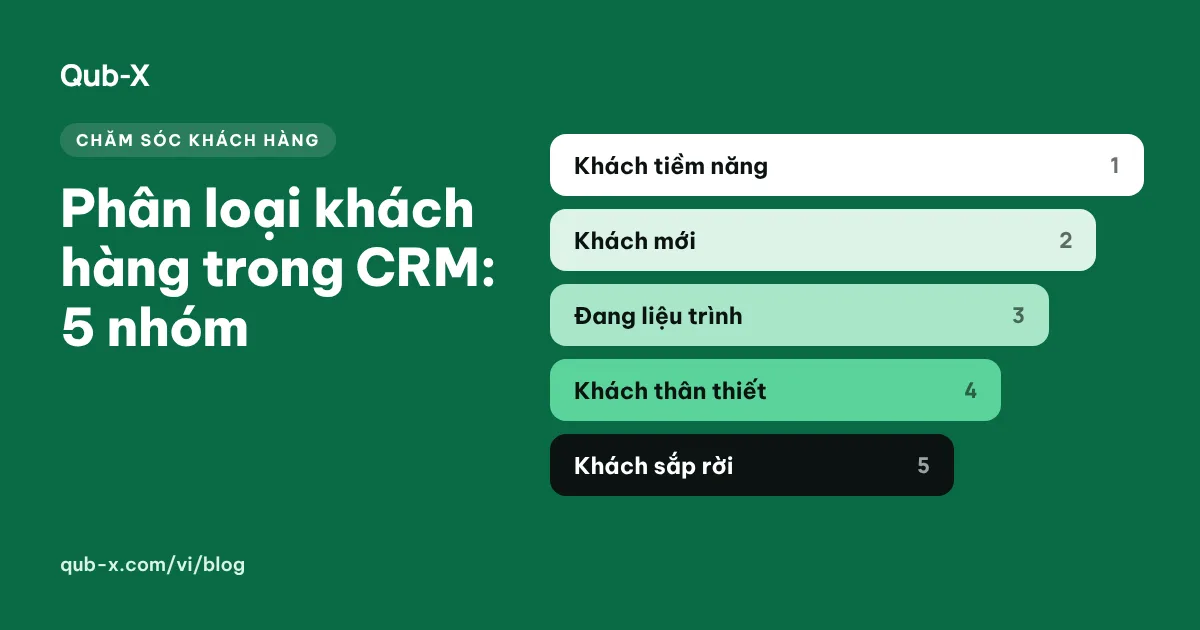
Customer segmentation means splitting your client list into groups that share the same status, so each group gets the right kind of follow-up instead of the whole list getting one generic message. For an aesthetic clinic, the easiest way to split is by where the client sits on their journey: just enquired, just visited, mid-course, loyal or about to leave. This article gives you 5 groups, the rule for placing clients in each, and what to do for each one.
Quick summary: customer segmentation in a CRM for an aesthetic clinic works well with 5 groups: prospects, new clients, clients in a treatment course, loyal clients and clients about to leave. Each group has a clear numeric rule (for example, more than 90 days since the last visit) and one specific follow-up task, so receptionists and consultants know who to contact today.
Why does an aesthetic clinic need customer segmentation?
Messages reach the right people. A client halfway through a course needs a reminder for the next session, not a new-client offer.
You know who to prioritise. If a consultant has 30 free minutes, they should call the about-to-leave group first.
You can measure it. How the number of clients in each group changes month by month shows whether your clinic is retaining clients well or poorly.
What are the 5 customer groups and how do you place clients in them?
Group | Suggested rule | What to do |
|---|---|---|
1. Prospects | Sent a message or left a phone number, has not visited yet | Reply the same day, invite them to book a consultation |
2. New clients | First visit within the last 30 days | Check in after treatment, suggest the next session |
3. Clients in a treatment course | Still has sessions left in a package they bought | Remind them before each session, tell them how many sessions remain |
4. Loyal clients | Bought 3 or more times, or has been with you for over 12 months | Give priority booking, invite them to try new services |
5. Clients about to leave | No return visit for over 90 days, or finished a package without buying again | Call to ask why, invite them back for a check-up |
The figures of 30 days, 90 days and 3 visits are suggestions. Adjust them to your service cycle: if a service is done every 4 to 6 months, your "about to leave" threshold must be longer than 90 days.
How should you look after each customer group?
Prospects
Speed matters more than wording. Bring all messages into one inbox so none are missed, and record the source from the very first message. If a prospect has not booked after 3 days, message once more; after 14 days, send a final message and then move them to your periodic-updates list.
New clients
A check-in message 1 to 3 days after the first session is both good service and a chance to spot any reaction after treatment. The goal for this group is a second appointment.
Clients in a treatment course
A client who drops out of a package is a double loss: they don't see results, and the clinic loses the chance to sell the next package. Remind them before every session, and if they miss one, call them back that same week.
Loyal clients
This group needs price offers less than it needs recognition: the receptionist uses their name, remembers their usual doctor and keeps their preferred time slot. This is also the group to invite to refer friends.
Clients about to leave
One phone call asking why is worth more than ten promotional messages. Record the reason in the client file using a few fixed options (price, results, service attitude, moved away) so that at the end of the quarter you know why the clinic is losing clients.
How do you assign groups to clients in a CRM?
Assign by rule, not by hand. Groups should be calculated from data you already have: last visit date, sessions remaining, number of purchases. Manual tagging goes out of date after a month because nobody updates it.
Each client belongs to only one group at a time. A loyal client who is mid-course goes into "in a treatment course" until the package is finished.
Name groups in words your staff already use. The easier the name, the more the receptionist will use it.
Link each group to one task. A group with no task attached is just a label to look at.
The client file is where these rules pull their data from. If you're not sure what a file should contain, see client management software for clinics.
What are the 4 common mistakes in customer segmentation?
Creating too many groups. Beyond 7 groups, staff can't remember them; 5 is enough to start.
Splitting by gut feeling ("VIP client", "difficult client") instead of measurable rules.
Segmenting and then leaving it there, without tying it to a weekly follow-up schedule.
Looking only at revenue and ignoring time since the last visit. A big spender who hasn't returned in 6 months is a client about to leave.
Which metrics show whether customer segmentation is working?
Percentage of new clients with a second appointment within 30 days.
Package completion rate of the in-course group.
Number of about-to-leave clients who return after being contacted.
Check these three numbers every month. If the about-to-leave group keeps growing, the problem lies in aftercare, not in finding new clients.
TIP: Start with just one group: clients about to leave. Filter the list of clients with no visit in over 90 days and give each consultant 10 clients a week to call. Once you see results, add the other groups.
Conclusion
Customer segmentation doesn't need a complicated model. Five groups along the client journey, each with a clear rule and one task, are enough for your team to know who to contact today. You can try Qub-X free for 7 days to test the grouping on your own client list. Other parts of a CRM are covered in what a CRM system includes.
Frequently asked questions
Does a small clinic with fewer than 500 clients need customer segmentation?
Yes, but 2 to 3 groups are enough: in a course, about to leave, and everyone else. The smaller the list, the more each lost client affects you.
Is it better to segment by revenue or by behaviour?
Start with behaviour (last visit, sessions remaining), because it tells you what to do right now. Use revenue as a second layer to decide who gets priority within the same group.
How often should you review your segmentation?
Once a quarter. Check whether your day thresholds still match your service cycles, and drop any group that nobody uses.
Related articles
All articles on Customer care- Customer care
Post-Treatment Customer Care Process: 6 Steps and Sample Messages
A post-treatment customer care process for aesthetic clinics: 6 steps on a clear timeline, with a sample message for each step and tips for making the process run on its own.
- Customer care
Aesthetic clinic CRM vs a regular CRM: 7 differences
Many clinics try a sales CRM and find it does not fit: no packages, no allergy field, no Zalo. This guide compares an aesthetic clinic CRM with a regular CRM on 7 points, so you can tell which one your clinic needs.
- Customer care
Staff Not Using the CRM After You Bought It? 7 Reasons and How to Fix Them
Staff not using your CRM is usually a rollout problem, not a software problem. Here are 7 common reasons in aesthetic clinics, the warning signs, and a 30-day plan to get the whole team on board.