
Spa treatment packages and prepaid cards: no more session disputes
Disputes over remaining sessions can cost you clients as surely as a disappointing service. Here is how to record, deduct and track spa treatment packages and prepaid cards so the client and the spa always see the same number.
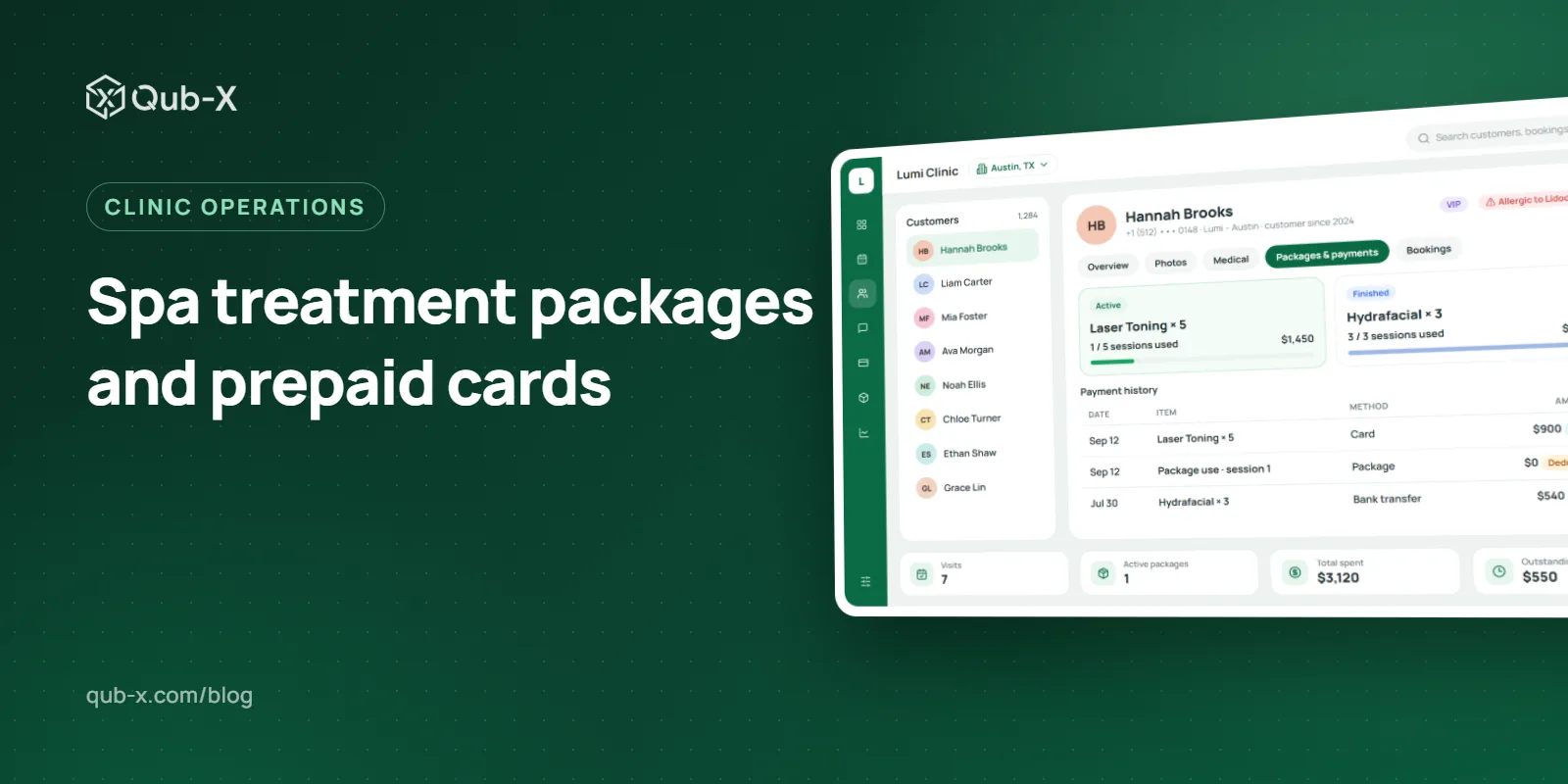
Managing spa treatment packages properly means every package a client buys has a set number of sessions, a value, an expiry date and a history of each use, all recorded on the client's profile and deducted as soon as a session is completed. The client and the spa then always see the same number, and "How many sessions do I have left?" no longer turns into an argument. This article explains how to record a package, the rules for deducting sessions and how to handle the tricky situations.
Why do disputes over remaining sessions happen so often?
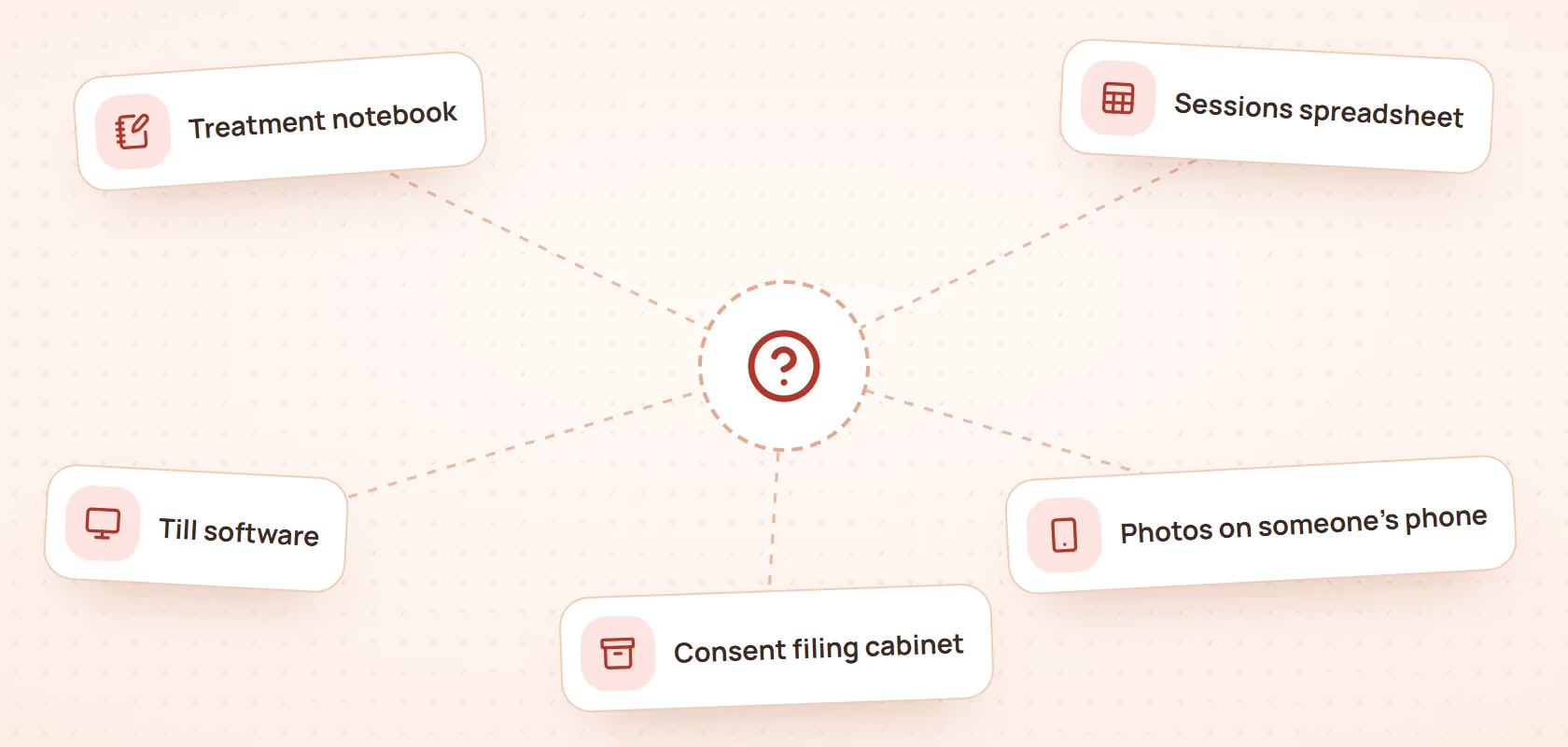
Many disputes come not from dishonesty but from the way records are kept. Common causes:
The package is written in a notebook or on a paper card. The client keeps one copy, the spa another, and the two drift apart.
Sessions are deducted at the end of the day, so one day a deduction is forgotten and another day it is made twice.
The client uses the package at another branch, which cannot see the records of the branch that sold it.
The client switches to another service in the package, but there is no clear conversion rule.
The person who sold the package has left, and no one remembers what was promised.
Whenever a dispute arises, the spa either gives in to keep the client, losing revenue, or stands firm, losing goodwill. The way out of that choice is to record everything correctly from the start.
What should a treatment package record include?
Information | Example | Why it matters |
|---|---|---|
Package name and services included | 10-session facial package | Shows what the client is entitled to |
Number of sessions and package value | 10 sessions, 10 million VND | Gives the value per session when converting |
Purchase date and expiry date | 1 June, valid for 12 months | Avoids disputes when the package expires |
Branches where it can be used | All branches | The client knows where to use it |
Agreed conditions | Can be switched to service X | Keeps the promise even if the seller leaves |
Usage history | Date, service, staff member, client confirmation | Evidence for every session deducted |
Sessions remaining | 8 sessions | The number clients ask about |
All of this should sit on the client's profile, next to their appointments and treatment history. Our guide to spa customer records management explains how to bring it together in one place.
How do treatment packages, stored-value cards and membership cards differ?
These three forms of prepayment are often all called "cards", but they are deducted and tracked differently:
Type | What the client prepays for | Deducted by | What clients usually ask |
|---|---|---|---|
Treatment package | A set number of sessions of a specific service | Sessions | How many sessions do I have left? |
Stored-value card (prepaid card) | A sum to spend on various services | Amount, at each service's price | How much is left on my card? |
Membership card | Benefits for a set period | Validity period; nothing is deducted | When does my card expire? |
Do not use one shared spreadsheet for all three. Each type needs its own deduction method, or the balance will be wrong from the first use.
Managing spa treatment packages: 6 rules for deducting sessions accurately
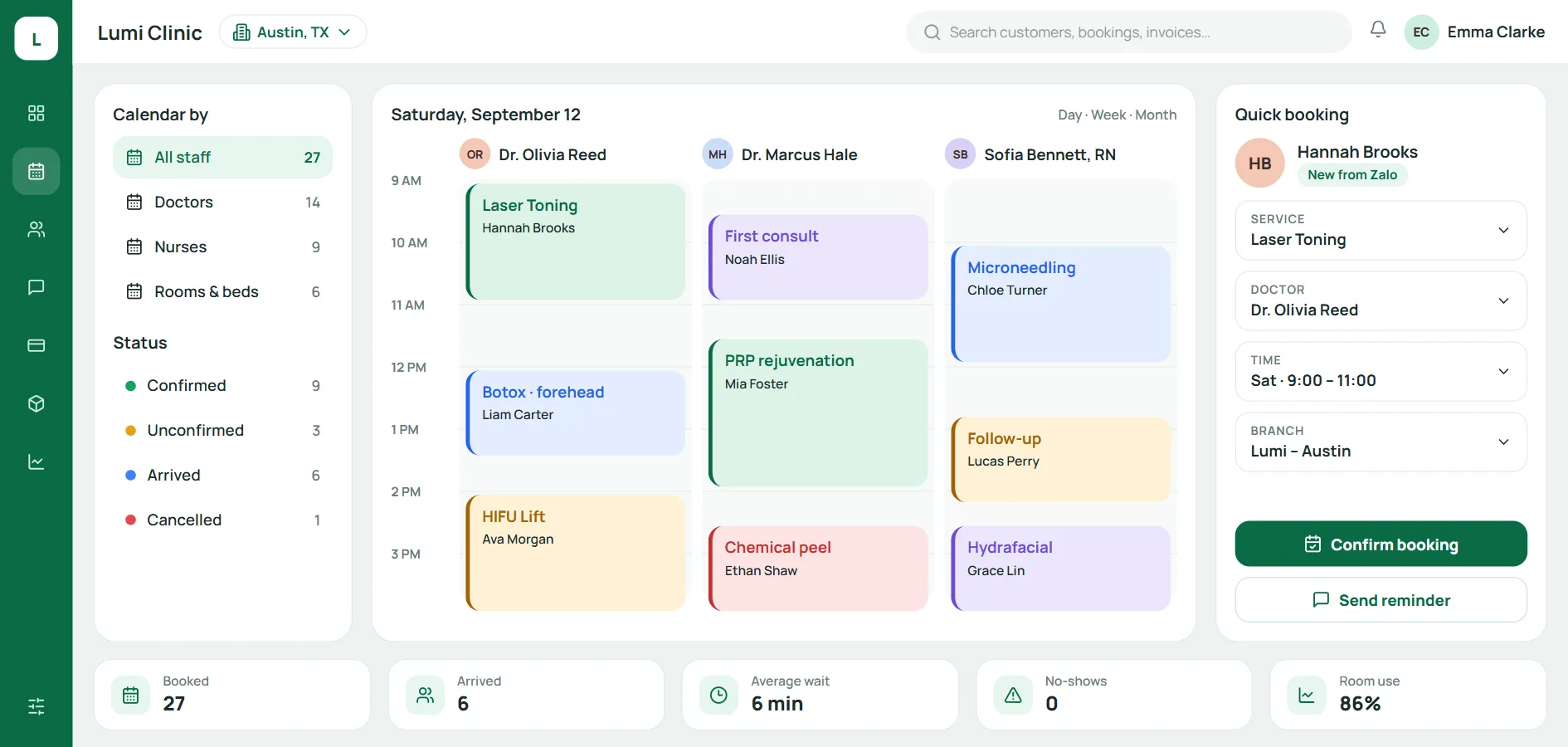
Deduct the session as soon as the service is completed, not at the end of the day.
Have the client confirm every deduction, with a signature or an electronic confirmation.
Send the client their remaining sessions by message after every visit. They can check it themselves, so a discrepancy is caught the same day instead of three months later.
Service switches need a formula, such as converting by value per session, written into the package conditions.
All branches share one set of package records, instead of each keeping its own book.
Explain the late cancellation policy before you sell: the client should know from the moment they buy whether a last-minute cancellation counts as a used session. Display the policy at the front desk and publish it on your website or booking app; under the law, general terms only bind the client if they were made public beforehand (Law on Protection of Consumer Rights 2023, Article 27, in Vietnamese).
Handling the tricky situations
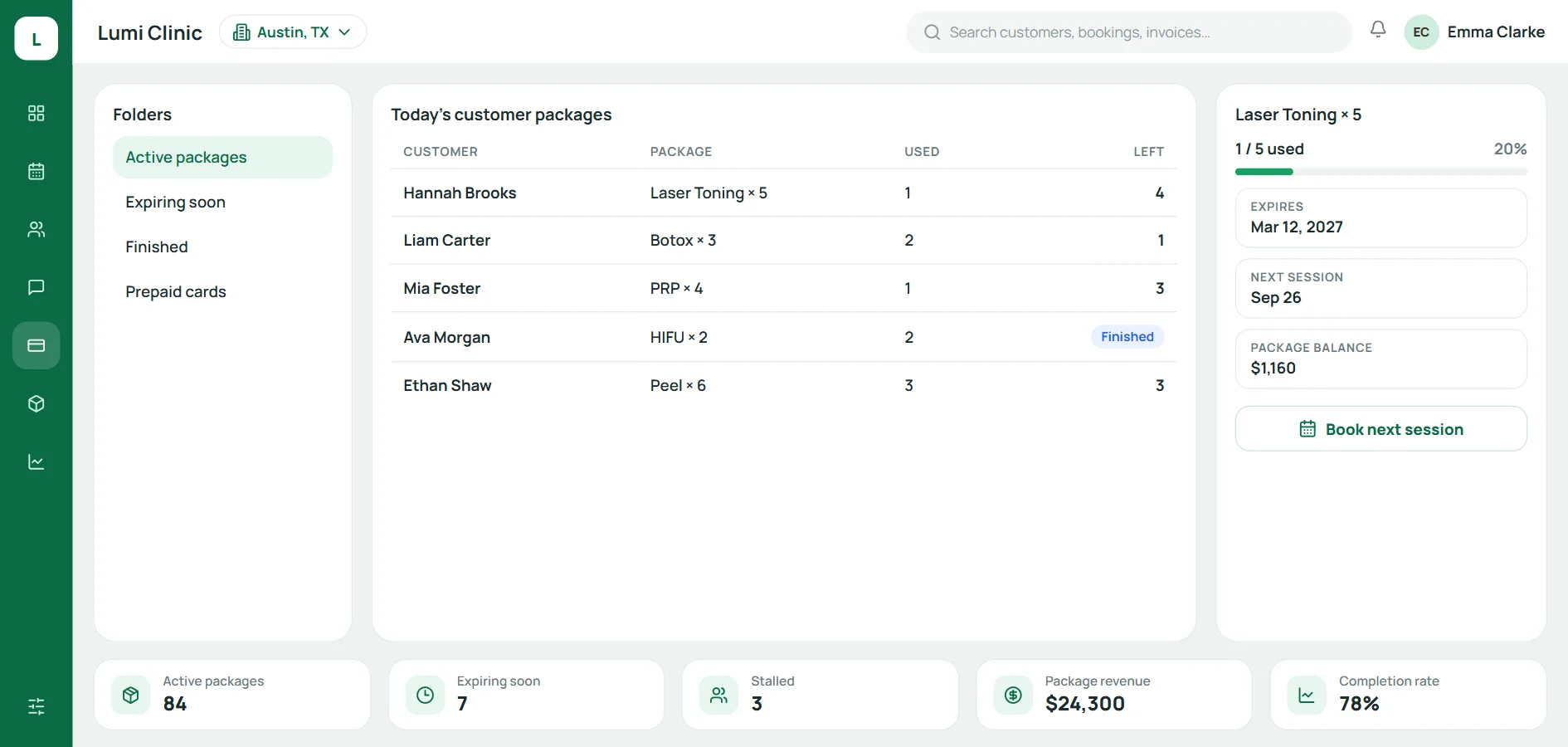
The package has expired but sessions remain
State the expiry date clearly at the point of sale, and remind the client far enough ahead to give them time to book. Many spas allow a one-time extension under conditions; what matters is that the policy is communicated in advance and applied the same way to every client.
The client wants to transfer the package to a family member
You decide whether to allow it, but write the decision into the package conditions. If you allow it, record the recipient on the profile and check that the service suits the recipient's condition.
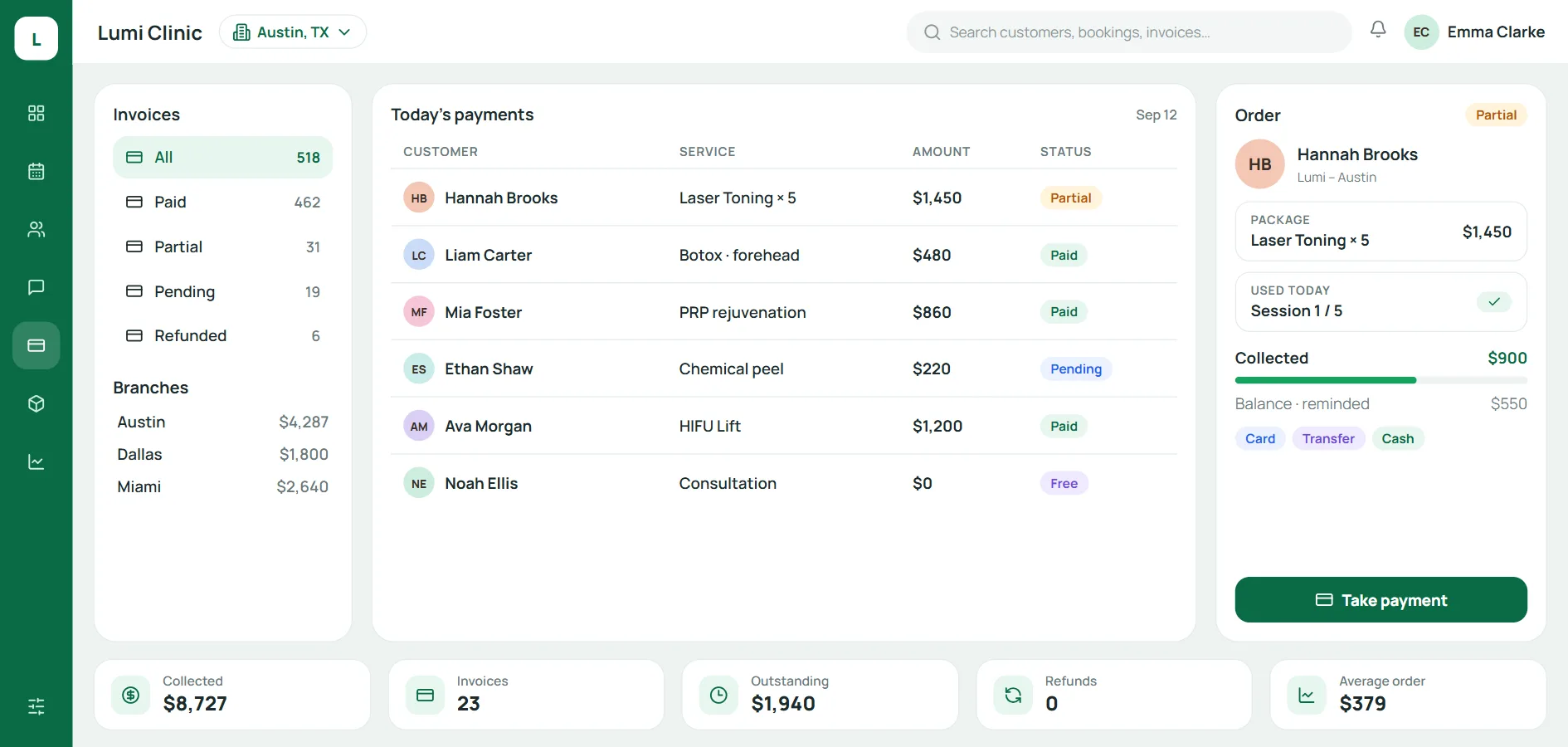
The client wants to stop the package and get a refund
This calls for a written policy applied consistently. A package valid for 3 months or more may be treated as a contract for continuous services under the Law on Protection of Consumer Rights 2023 (Article 3, clause 6). For this type of contract the law requires a written contract with a copy for the client; unless both sides agree otherwise, the client may stop at any time and pay only for the services already used (Article 42).
To be safe, apply the same approach to treatment packages: put the conditions in writing, give the client a copy and work out in advance how unused sessions are refunded. The conditions must not contain prohibited terms, such as letting the spa change agreed conditions on its own or imposing penalties that disadvantage the client (Article 25). When drafting refund and exchange terms for prepaid packages, consult a lawyer so they comply with current consumer protection regulations.
Tracking treatment packages in your reports
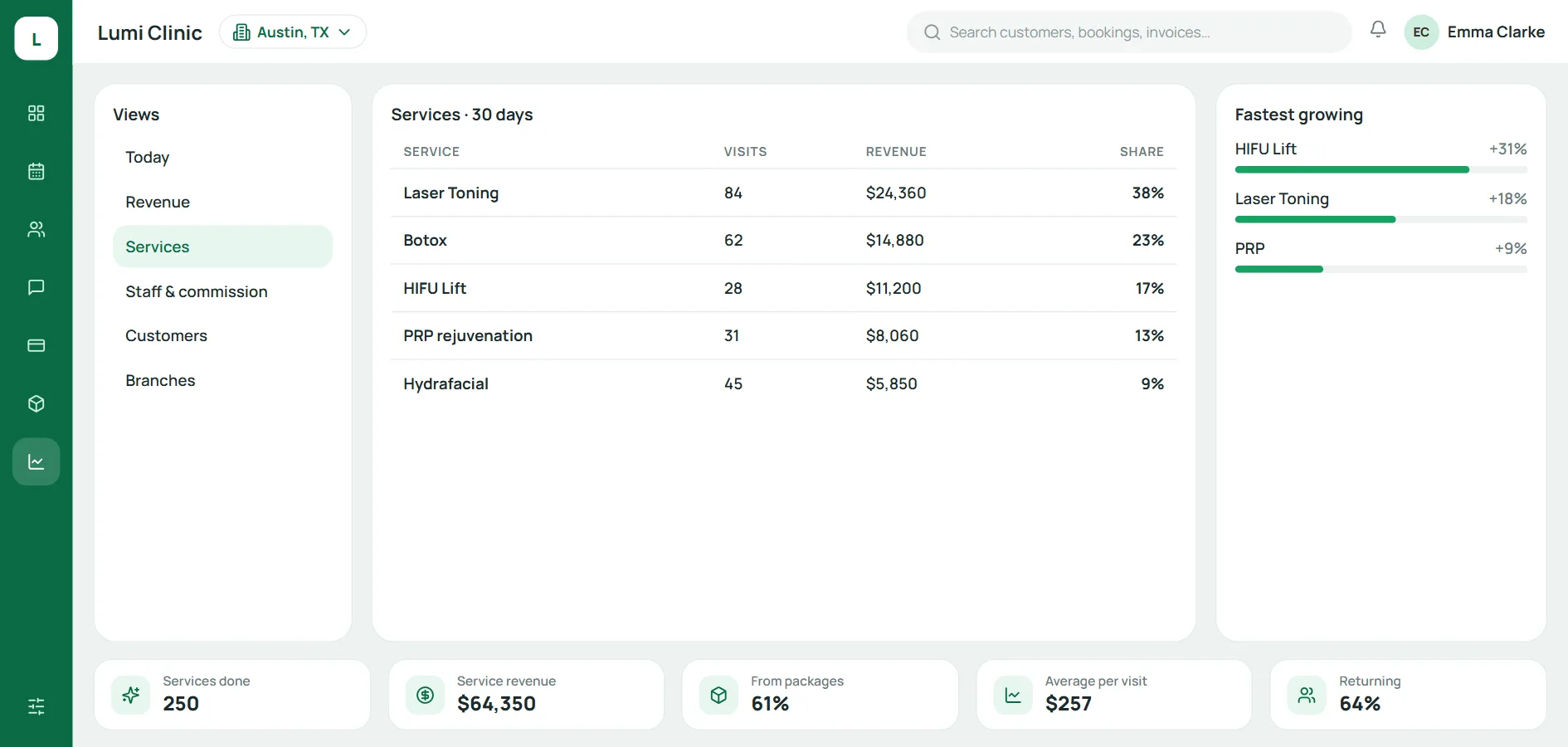
Sessions sold but not yet delivered are services the spa still owes, with the staff and supply costs that come with them. Track this number every week alongside how full your appointment book is. If remaining sessions grow faster than your capacity to deliver them, clients will struggle to book, and the dispute shifts from "How many sessions do I have left?" to "Why can't I get an appointment?"
In the services report, separate visits delivered from packages from visits paid on the day. Our article on spa revenue reports explains why the cash collected when a package is sold should be kept apart from the value of services actually delivered.
How does Qub-X handle treatment packages?
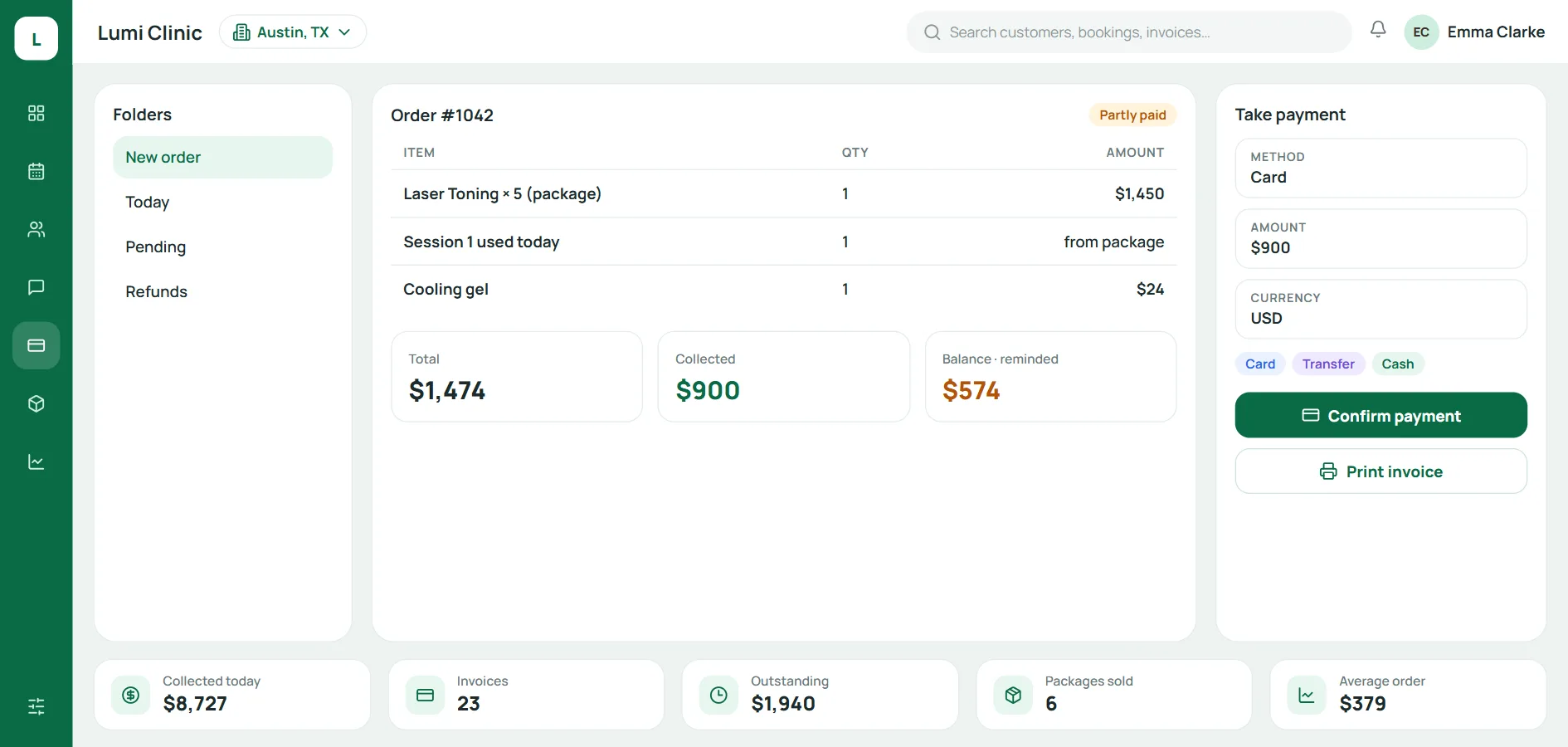
If your spa is looking for a tool, Qub-X links treatment packages and prepaid cards to orders and client profiles:
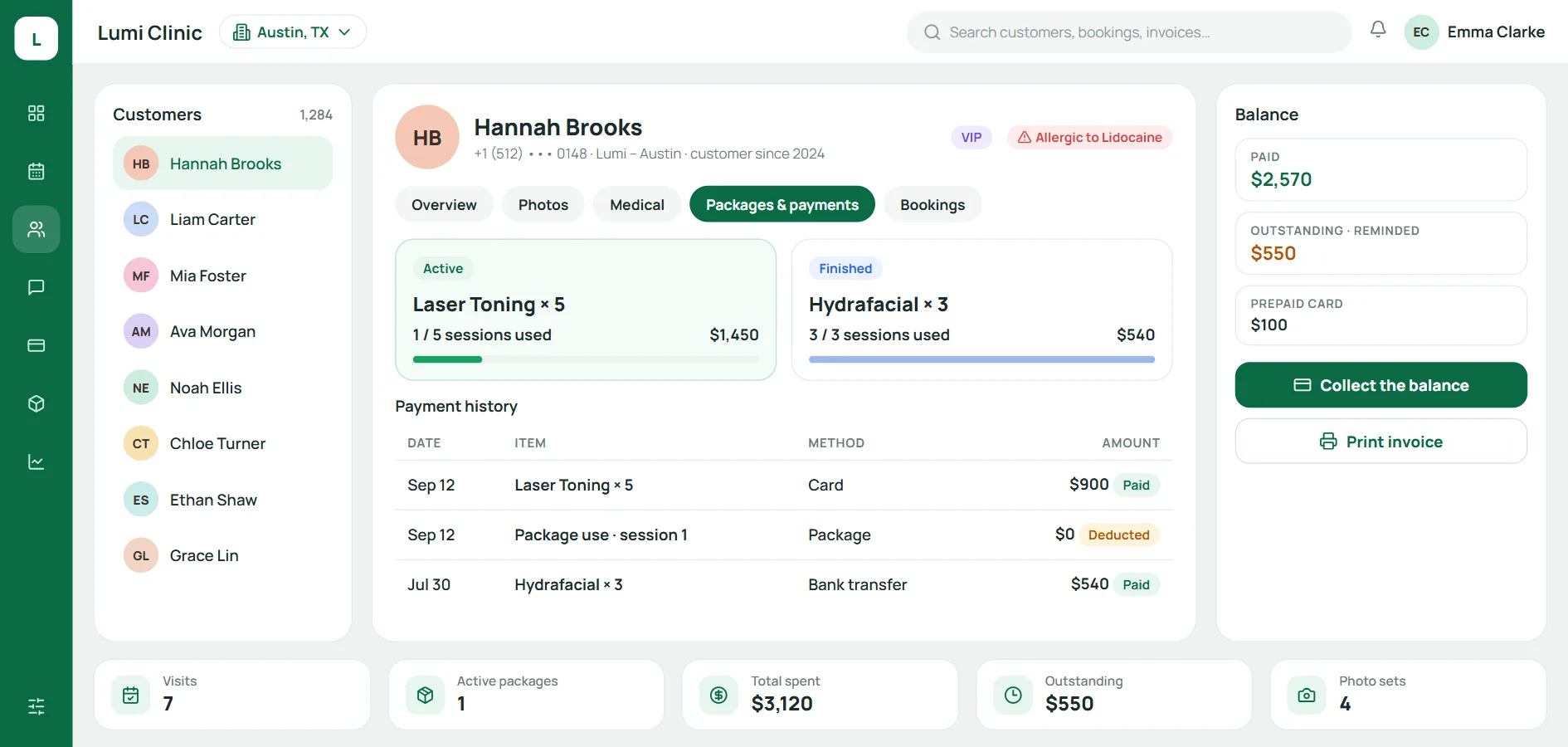
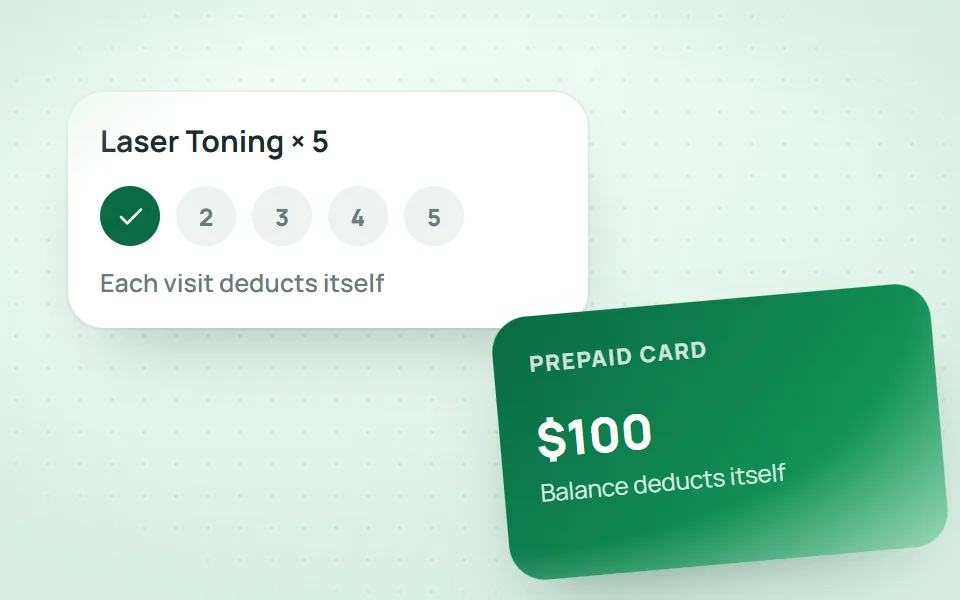
Packages count by session or by shot, and marking an appointment as done deducts one session.
A client can buy a package and have the first session in the same order: tap Use today and the first session is deducted at once.
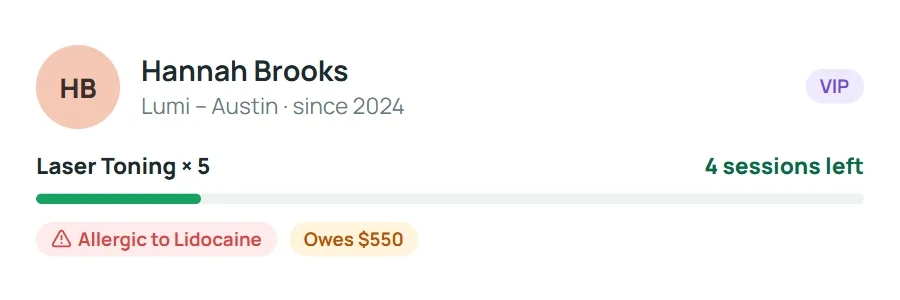
The client profile shows sessions used and remaining, the expiry date and the unused value.
Prepaid cards carry bonus credit and an expiry date; the part of the card the client has paid for is the part that unlocks.
Refunds go through submit, approve and complete steps, and completing one can recover the remaining sessions or the prepaid card balance.
Qub-X runs at an aesthetic clinic chain with 3 branches, about 500 staff and more than 3,500 bookings a month.
Frequently asked questions
Should clients confirm every package session? Yes, ideally. A signature or electronic confirmation from the client is evidence for each session deducted, and helps resolve later questions quickly.
Can clients use their treatment package at another branch? Yes, if the package conditions allow it and all branches share one set of package records. Separate books per branch are a common source of disputes in spa chains.
What happens when a package expires with sessions remaining? Apply the policy you communicated at the point of sale. To avoid the situation, remind the client well before the package expires.
Should we use paper cards or track packages in software? Paper cards are easy to lose and drift from the spa's records. Software, with a message showing remaining sessions, keeps the client and the spa on the same number.
Conclusion
Deduct sessions as soon as the service is done, have the client confirm, and send them their remaining sessions after every visit. These three habits prevent most disputes over treatment packages. Book a Qub-X demo to see packages and prepaid cards deducted automatically on your spa's workflow, or try it for 7 days.
Sources
This article summarises regulations in force as of October 2026. It is for reference only and does not replace legal advice.
Related articles
All articles on Clinic operations- Clinic operations
Spa time and attendance software: face check-in and automatic shift schedules
Paper timesheets, spreadsheets and leave requests sent by message make closing the month slow. Here is what spa time and attendance software should cover, from face check-in and shifts to multi-branch timesheets, and which Vietnamese rules on hours and personal data apply.
- Clinic operations
Spa inventory management: deduct supplies per visit, track lots and expiry
Stock never matches and nobody knows why? A practical guide to spa inventory management for spas and aesthetic clinics: usage norms per service, per-visit deduction, expiry-first picking, confirmed transfers and a monthly count.
- Clinic operations
How to calculate spa therapist commission: 4 models with examples
Spa therapist commission that is wrong or late can drive good therapists away. Here are 4 commission models, worked examples and how to build a transparent commission statement.