
How to calculate spa therapist commission: 4 models with examples
Spa therapist commission that is wrong or late can drive good therapists away. Here are 4 commission models, worked examples and how to build a transparent commission statement.
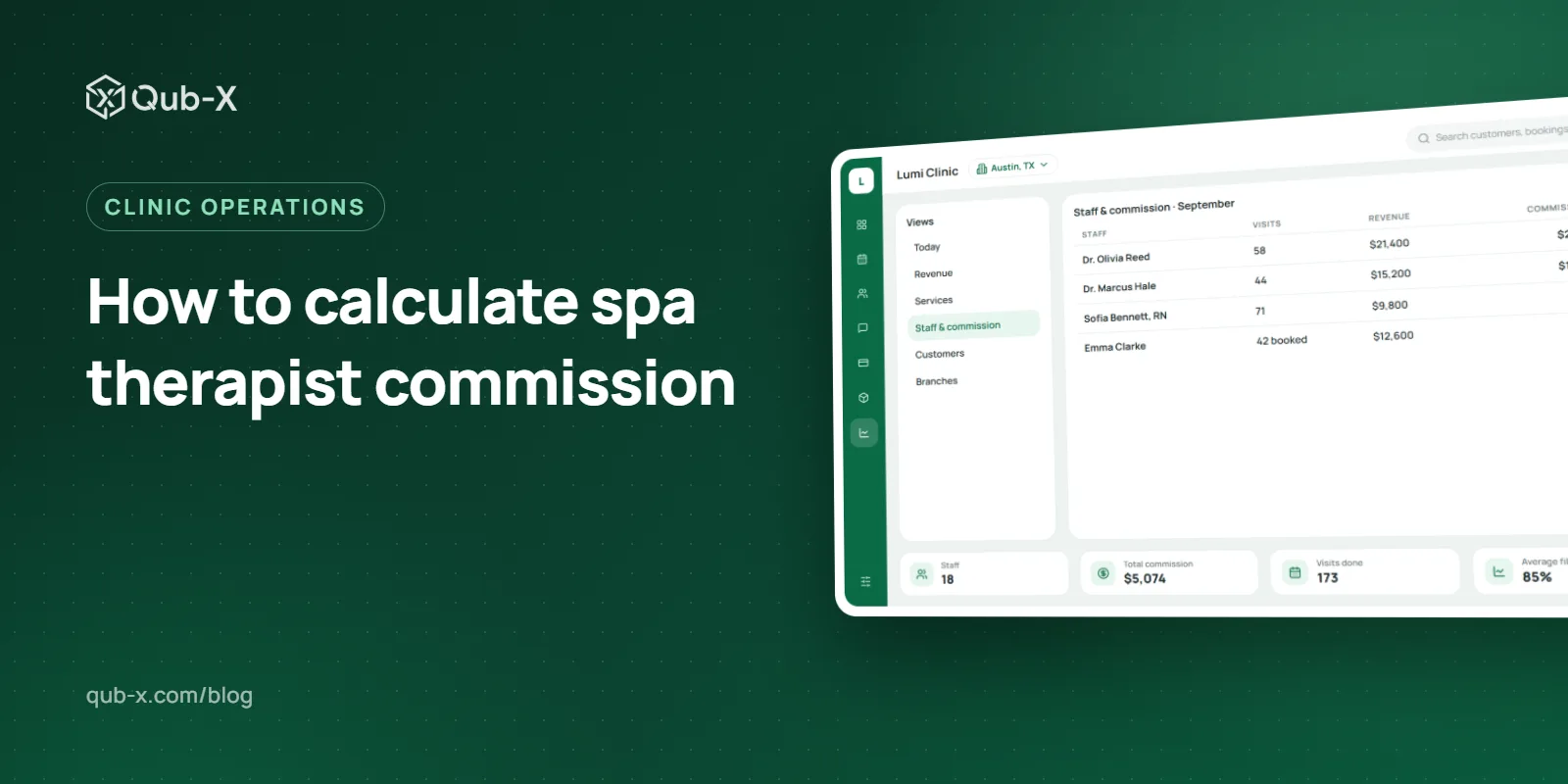
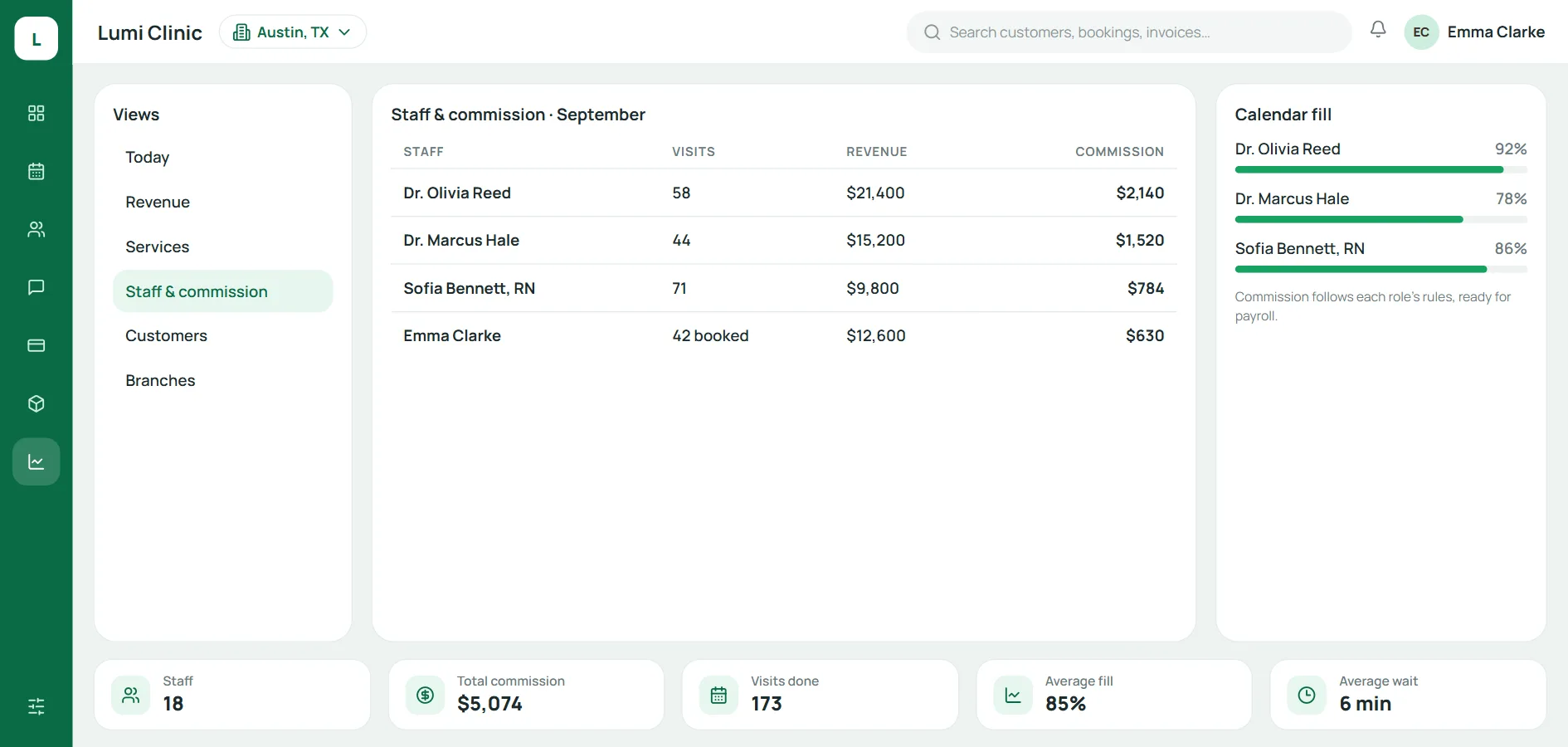
Spa therapist commission is usually calculated with one of four models: a fixed amount per service, a percentage of the service value, a percentage that rises with revenue tiers, or a team split when several people serve the same client. Any of them can work, as long as the rules are written down, commission is calculated from data recorded at the time of each transaction, and therapists can check the figures themselves. This article compares the four models, walks through worked examples and explains how to build a transparent commission statement.
Why does commission so often upset staff?
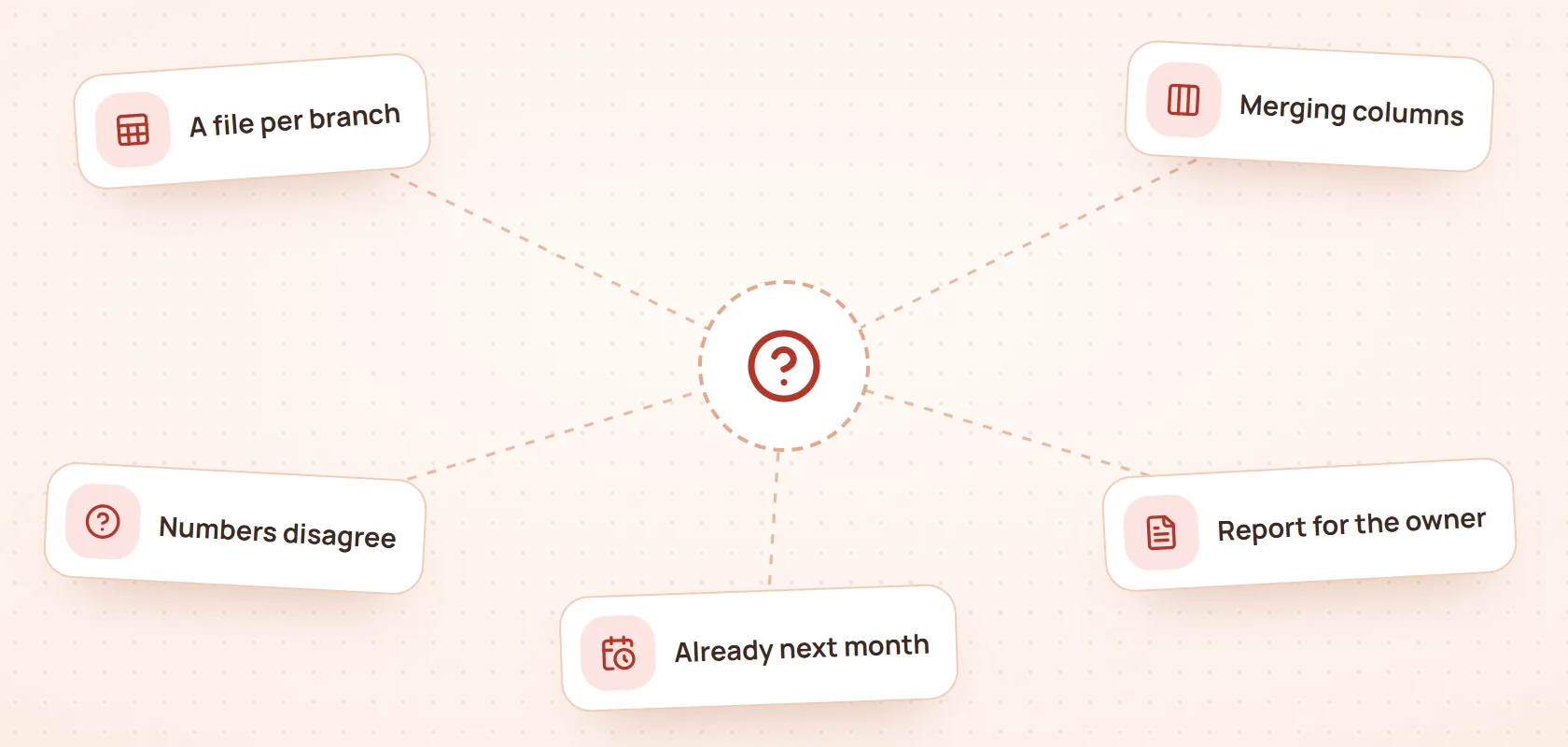
Commission is a part of their income therapists watch closely, so every mistake gets noticed. Common causes:
The rules exist only in the owner's or the accountant's head, and are read differently each month.
Services are not recorded with the name of the person who performed them, so everyone relies on memory at month end.
It is unclear whether sessions in a prepaid package earn commission when the package is sold or when the session is performed.
Several people serve the same client, but there is no rule for splitting the commission.
The commission statement arrives late, leaving therapists no time to check it.
4 common spa therapist commission models
Model | How it is calculated | Works well for | Watch out for |
|---|---|---|---|
Fixed per service | A set amount per service, e.g. 50,000 VND each time | Few services with stable prices | Must be updated when prices change |
Percentage of service value | A rate applied to the service value | Many services at different prices | Agree whether it applies before or after discounts |
Revenue tiers | The rate rises once monthly revenue passes a threshold | Rewarding productivity | Tiers must be reachable, or they discourage staff |
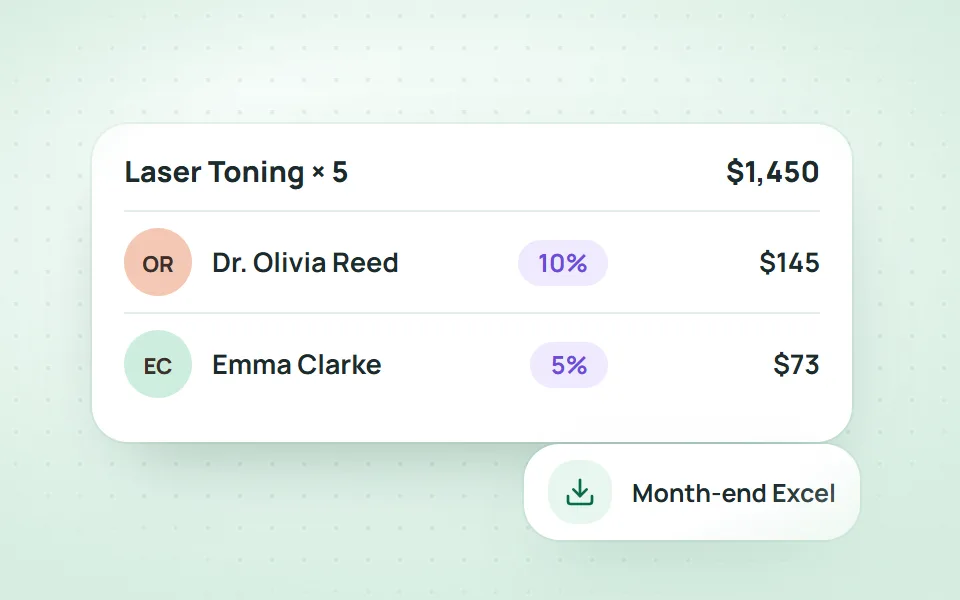
Team split | Commission on one service shared among several people by ratio | Services needing several people, or separate selling and delivery | The ratio must be written down for each service |
Many spas combine two models, for example a percentage for the therapist who performs the service and a fixed amount for the consultant who sells the package.
Worked commission examples
The figures below are illustrative assumptions to show the calculation, not recommended rates.
Revenue tiers: the spa pays 8% on service value up to 50 million VND a month and 10% on the portion above 50 million. Therapist A performs services worth 62 million VND in the month.
Portion of service value | Rate | Commission |
|---|---|---|
First 50 million VND | 8% | 4,000,000 VND |
12 million VND above the threshold | 10% | 1,200,000 VND |
Total | 5,200,000 VND |
Here the higher rate applies only to the portion above the threshold. If your spa applies it to all revenue once the threshold is passed, say so in your policy, because the two methods give different results.
Team split: a 3 million VND service carries 10% commission, or 300,000 VND, split 60% to the lead therapist (180,000 VND) and 40% to the assistant (120,000 VND).
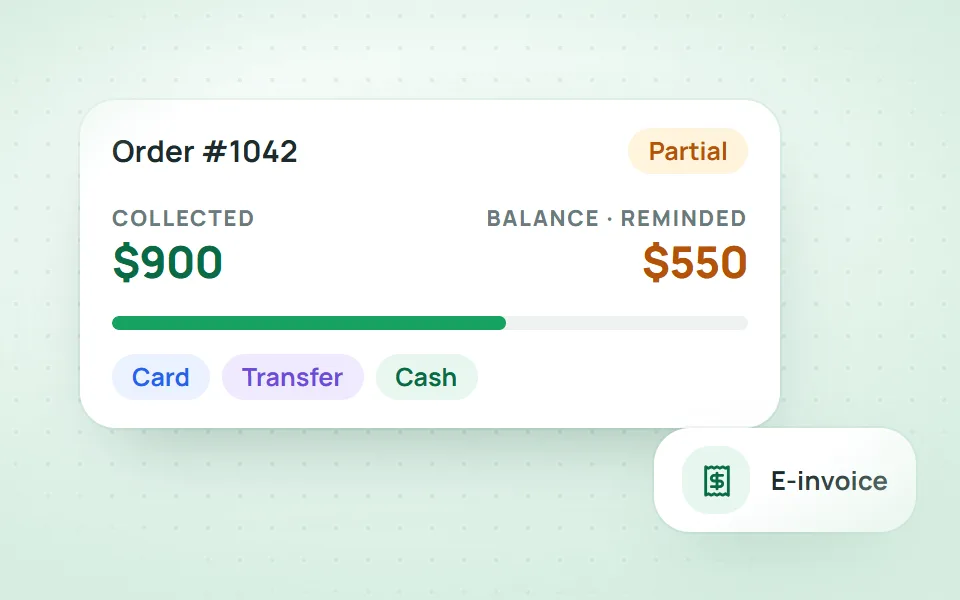
On money collected: a package costs 36,250,000 VND and the client has paid 22,500,000 VND so far. At 10%, the provisional commission is 2,250,000 VND; when the client pays the remaining 13,750,000 VND, commission rises by 1,375,000 VND. The spa never pays commission on money it has not collected.
Prepaid treatment packages: commission at sale or at delivery?
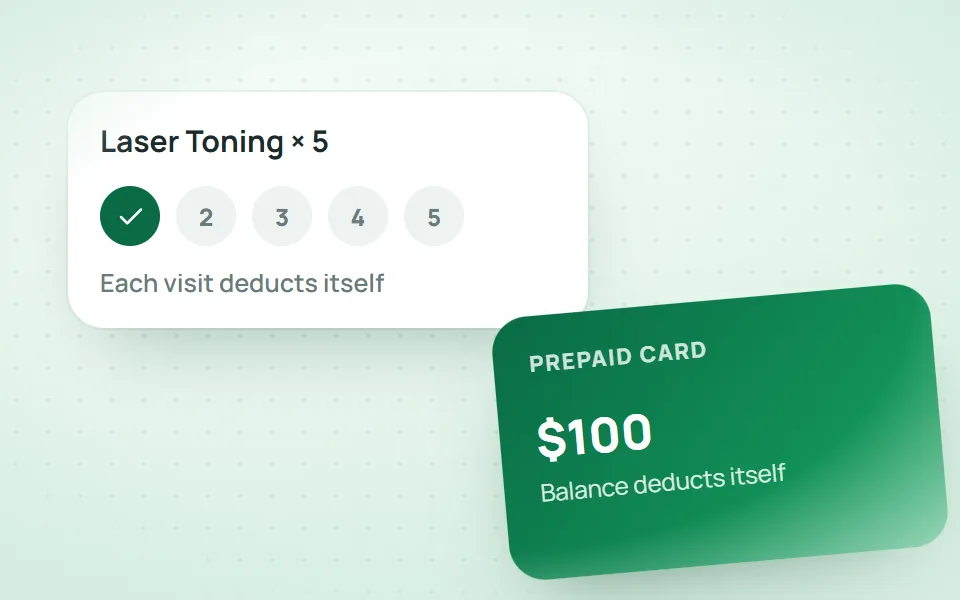
This question often causes disputes. One fair approach is to separate the two roles:
The person who sells the package (usually a consultant) earns a sales commission when the client pays for it.
The person who performs the service (the therapist) earns a service commission for each session once it is completed, based on the per-session value of the package.
Illustrative example: a 10-session package costs 10 million VND, so each session is worth 1 million VND. The therapist who performs the third session earns commission on that 1 million VND, whichever month the package was sold in. This ties commission to the work actually done, and matches the way a spa revenue report separates cash collected from the value of services delivered.
5 principles for a transparent commission statement
Put your commission policy in writing: the model, the rates, and how you handle discounts, packages and redone services. It should match your employment contracts and pay policy.
Record who performed each service at the time of the transaction, instead of relying on memory at month end.
Let therapists see their provisional commission during the month, so they do not wait until payday.
Send a statement listing every service, not a single total, so staff can check it. The Labour Code 2019 (in Vietnamese) requires employers to give employees a payroll statement every time wages are paid (Article 95, clause 3); the commission statement should go with it.
Have a clear process for queries: who questions go to, and how quickly staff get an answer.
Service data should also match your 7 spa management KPIs, because revenue per staff member is used both to pay commission and to assess productivity.
Is commission subject to personal income tax and social insurance?
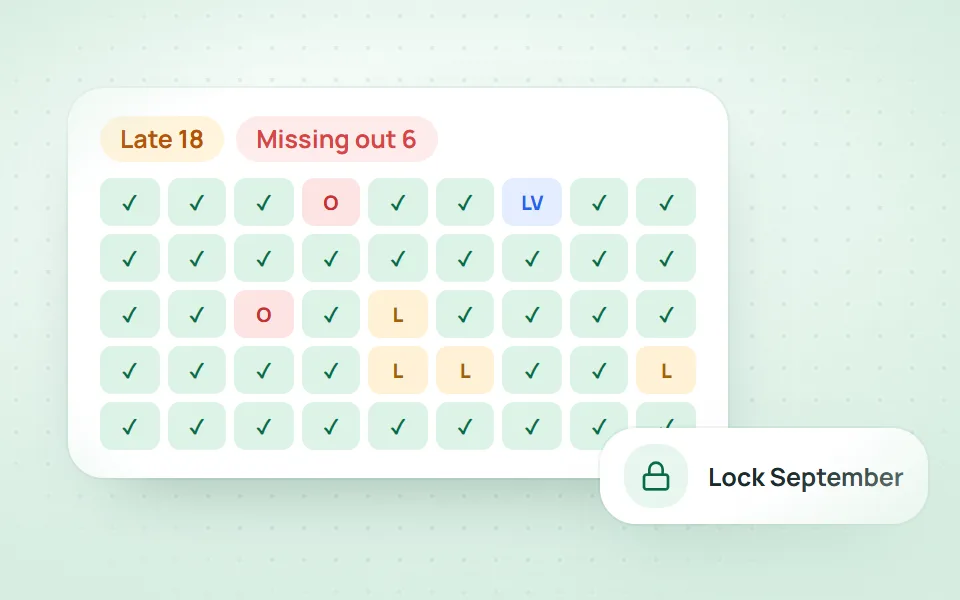
When running payroll, the accountant combines the closed timesheet with each person's commission total, then works out tax and insurance.
Commission paid to employees is generally treated as income from salaries and wages: the Law on Personal Income Tax 2025 (in Vietnamese) places payments of a salary or wage nature in this category (Article 3, clause 2). To be safe, withhold personal income tax on commission as you would on salary, following your accountant's guidance on withholding and expense recording.
On social insurance, Decree 158/2025/ND-CP (in Vietnamese) excludes from the salary used for compulsory social insurance any additional payments that depend on or vary with productivity (Article 7). Commission that varies with sales may fall into this group, while a fixed amount paid every period and written into the contract may need to be included (Law on Social Insurance 2024, Article 31). Ask your accountant to classify each payment before running payroll.
How does Qub-X handle commission?
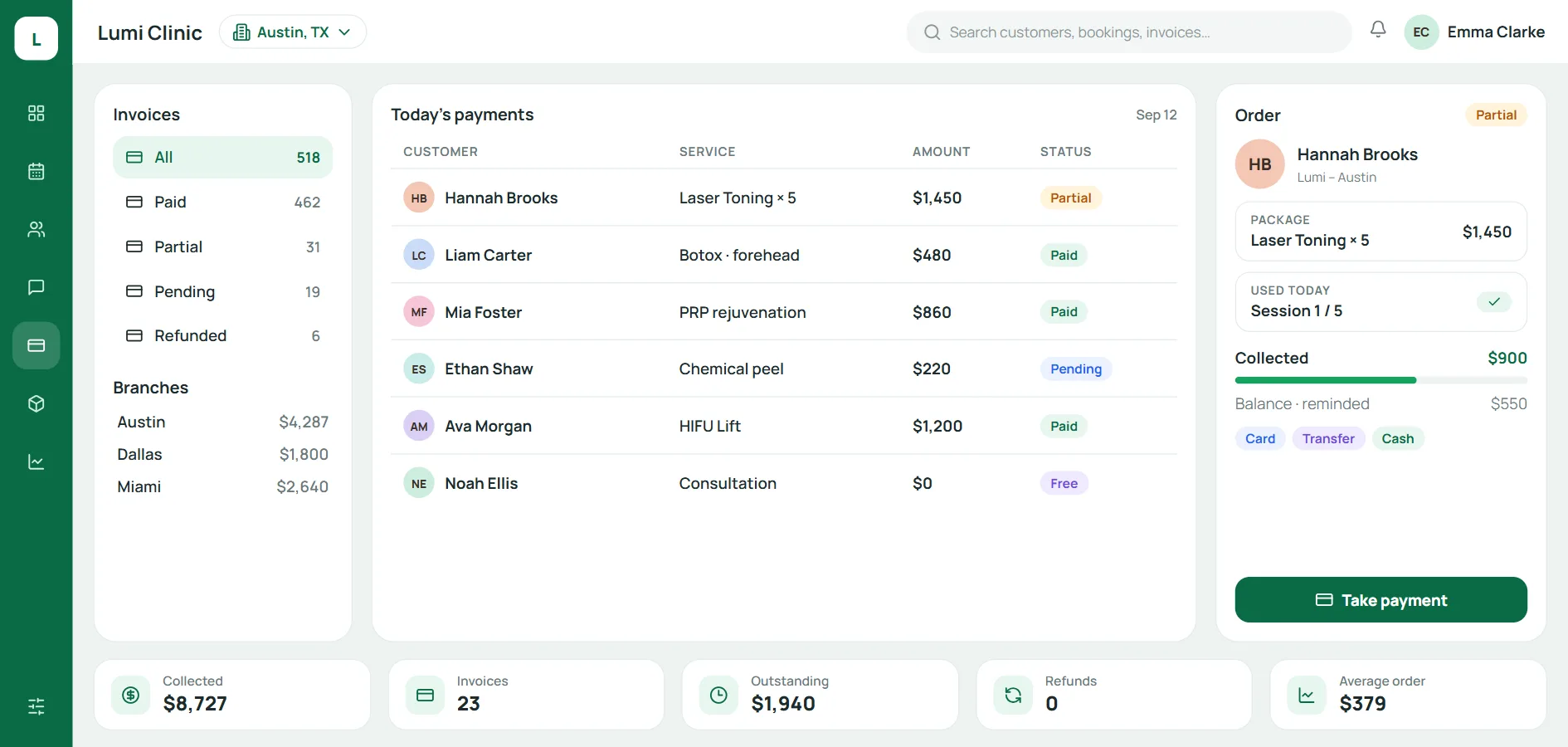
If your spa works out commission across several Excel files, Qub-X payments attaches commission to every order:
Each person earns separately, as a percentage, a fixed amount or a rate per service, and one order can carry several staff.
Commission is based on money actually collected: it rises when a balance is paid and falls with a refund.
Totals per staff member can be filtered by month and exported to Excel for the accountant.
Staff see their own commission under My commission, and view and edit rights are set separately.
For revenue tiers, the accountant applies the tiers to the exported monthly totals under the spa's policy. Qub-X runs at an aesthetic clinic chain with 3 branches, about 500 staff and more than 3,500 bookings a month.
Frequently asked questions
What percentage should spa therapist commission be? There is no single rate for every spa: it depends on service prices, base salary and supply costs. Set it so pay stays competitive while the spa still makes a margin on each service.
If a client gets a discount, which price is commission based on? That depends on your policy, but write it down. The common approach is the amount the client actually paid, so commission moves in line with real revenue.
Does a service redone because the client was unhappy earn commission? Many spas pay no commission on redone services, to encourage getting it right first time. Whichever you choose, put it in your policy and apply it equally to everyone.
Conclusion
Any commission model can work, as long as it is written down, calculated from data recorded at the time of each transaction, and therapists can see their provisional commission during the month. Book a Qub-X demo to see commission on every order in action, or try it for 7 days.
Sources
Labour Code 2019 (Government legal documents portal) (in Vietnamese)
Law on Personal Income Tax No. 109/2025/QH15 (Official Gazette) (in Vietnamese)
This article summarises regulations in force as of October 2026. It is for reference only and does not replace legal advice.
Related articles
All articles on Clinic operations- Clinic operations
Spa time and attendance software: face check-in and automatic shift schedules
Paper timesheets, spreadsheets and leave requests sent by message make closing the month slow. Here is what spa time and attendance software should cover, from face check-in and shifts to multi-branch timesheets, and which Vietnamese rules on hours and personal data apply.
- Clinic operations
Spa inventory management: deduct supplies per visit, track lots and expiry
Stock never matches and nobody knows why? A practical guide to spa inventory management for spas and aesthetic clinics: usage norms per service, per-visit deduction, expiry-first picking, confirmed transfers and a monthly count.
- Clinic operations
Spa treatment packages and prepaid cards: no more session disputes
Disputes over remaining sessions can cost you clients as surely as a disappointing service. Here is how to record, deduct and track spa treatment packages and prepaid cards so the client and the spa always see the same number.