
Spa appointment cancellations and no-shows: 7 client-friendly fixes
Every last-minute cancellation is a time slot you can hardly sell again. Here is how to measure, remind, set a policy and fill empty slots to reduce spa appointment cancellations.
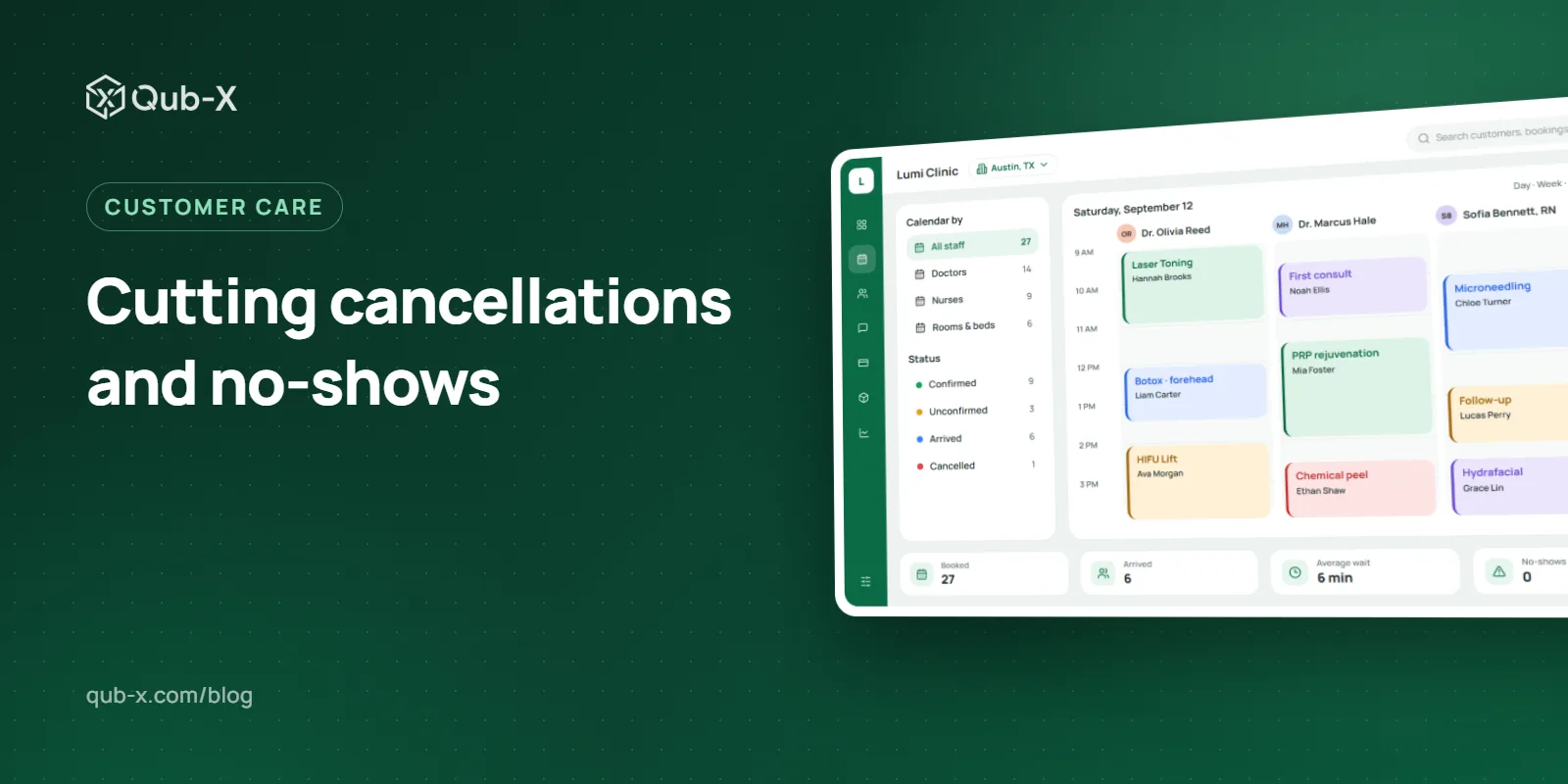
Three habits reduce spa appointment cancellations: reminding clients at the right time (the day before and on the morning of the visit), making it easier to reschedule than to skip, and having a clear cancellation policy that is explained before booking. This article shows how to measure cancellations and no-shows correctly, 7 ways to reduce them, reminder templates, and how to fill the gap when a client still cancels.
How do cancellations and no-shows differ?
These are two different problems that need to be measured and handled separately:
Cancellation with notice | No-show | |
|---|---|---|
What the client does | Cancels or reschedules before the appointment | Does not come and does not tell you |
What the spa can still do | Fill the slot with another client | Almost nothing; the time is lost |
Common causes | Something urgent came up, change of plans | Forgot, felt awkward cancelling, booked before being sure |
Main fix | Easy rescheduling, a waiting list | Reminders, reconfirmation |
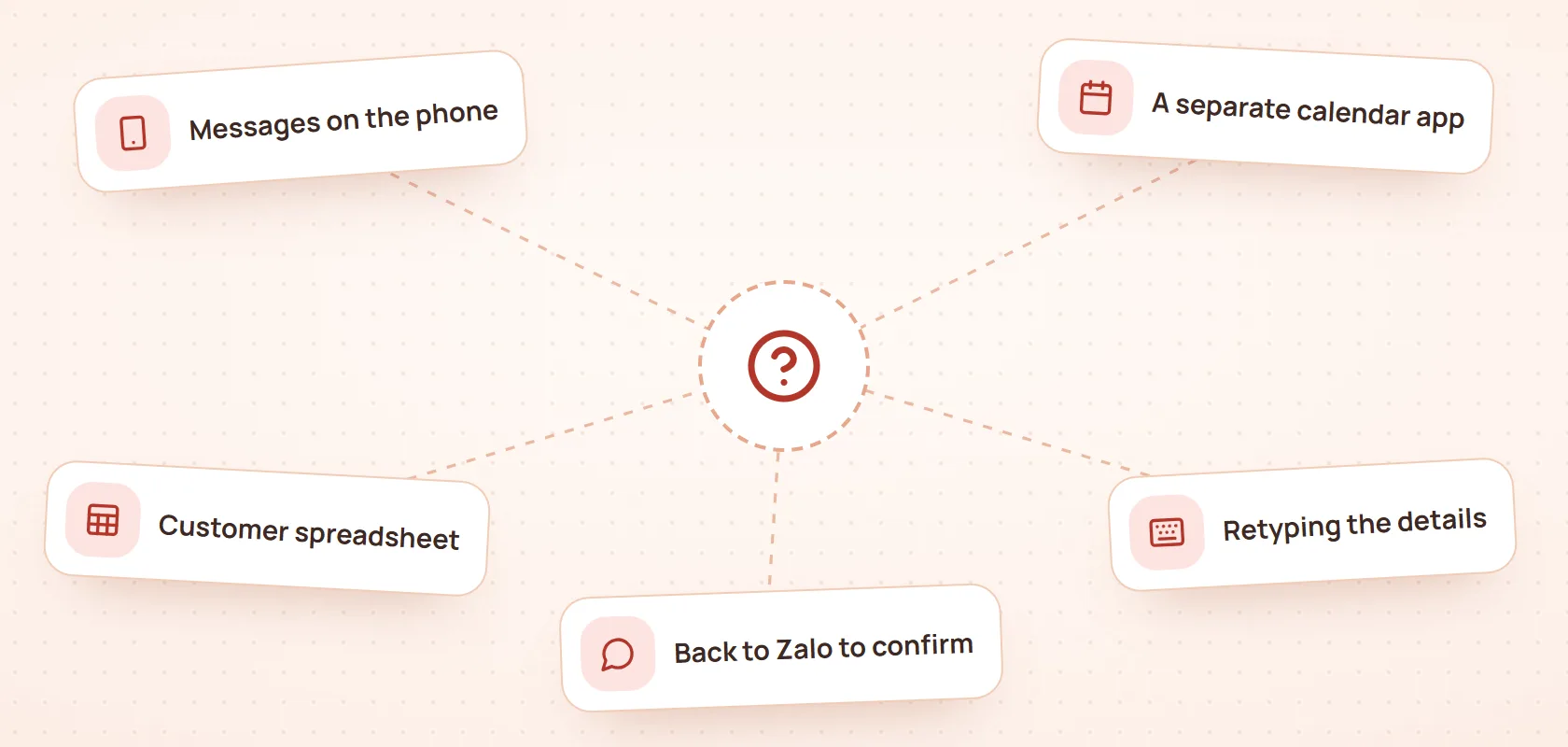
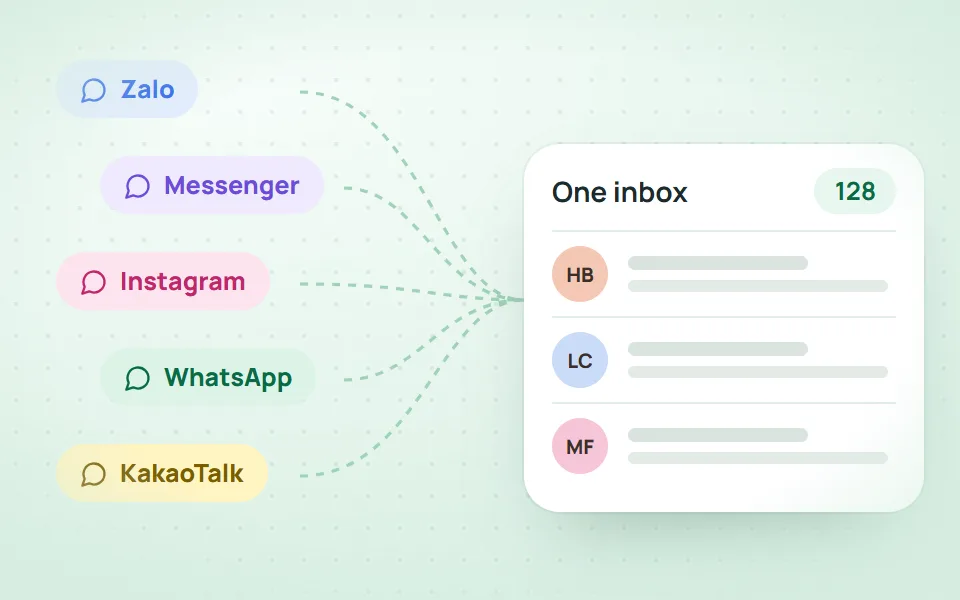
Lumping both into one number hides the problem. A spa with many cancellations with notice but few no-shows is in fairly good shape; the opposite means reminders need fixing now. When bookings live in many places, as above, cancelled slots stay blocked and both numbers are hard to measure.
How to calculate cancellation and no-show rates
Cancellation rate = Appointments cancelled before the visit ÷ Total appointments booked in the period.
No-show rate = Appointments where the client neither came nor told you ÷ Total appointments booked in the period.
Also track late cancellations separately (for example under 24 hours), because those slots are very hard to resell. Illustrative example: in one week there are 160 bookings, 12 cancellations with notice (7.5%), 5 of them under 24 hours, and 12 no-shows (7.5%). If each appointment averages 60 minutes, the spa loses 17 hours of service it can hardly resell that week.
Track both rates weekly alongside the other measures in 7 spa management KPIs.
7 ways to reduce spa appointment cancellations and no-shows
1. Remind three times, at the right moments
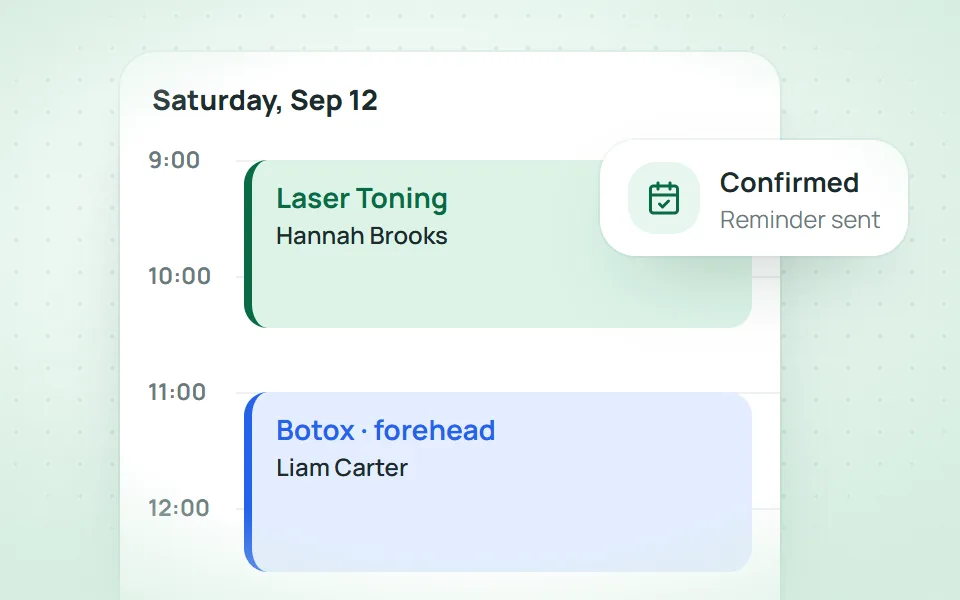
Once when the booking is made (confirmation), once the day before, and once on the morning of the visit. The day-before reminder gives the client time to reschedule; the morning one stops them forgetting.
2. Make rescheduling easier than skipping
Many clients do not turn up because they feel awkward cancelling. In the reminder, say clearly: "If you're busy, just reply to this message and we'll find another time." When rescheduling is easy, clients reschedule instead of going quiet.
3. Reconfirm bookings made far ahead
Bookings made two weeks or more in advance change more often. Ask the client to reconfirm one or two days before, and release the slot if they do not confirm after you have reached out.
4. Have a clear cancellation policy, explained before booking
The policy need not be strict, but it must be clear and stated when the booking is made, including when it is made in a chat. The example below is only a template to adapt to your services:
Please let us know at least 24 hours in advance if you need to reschedule or cancel. For clients on a treatment package, a cancellation less than 4 hours before the appointment, or a no-show without notice, counts as one session used, except in cases of force majeure.
Display the policy at the front desk and publish it on your website or booking page; under the law, general terms only bind the client if they were made public beforehand (Law on Protection of Consumer Rights 2023, Article 27, in Vietnamese). The law also bans standard terms that impose penalties that disadvantage the client (Article 25, clause 12), so a session-deduction rule for late cancellations should come with a matching commitment from the spa when it reschedules or cancels at short notice. Have a lawyer review it before use.
Be gentler with first-time clients; for clients with repeated no-shows, you can ask for a deposit next time.
5. Record cancellation history on the client profile
When the front desk sees that a client has missed two appointments, they can reconfirm more carefully or offer an off-peak slot. This only helps if it is on the client profile, not in one person's memory.
6. Book only when the client is sure
A consultant keen to close quickly can book a slot the client is not sure about. One extra question, "Are you sure this time works for you?", cuts phantom bookings.
7. Ask why when a client cancels
Record the reason for every cancellation. After a month, if many clients cancel because of opening hours or long waits, that is an operations problem, not a client problem.
Appointment reminder templates
The day before: "Hi Mai, this is a reminder of your facial at 3:00 pm tomorrow (Thursday) at our District 3 branch, with therapist Ha. If you need to change the time, just reply to this message."
On the morning of the visit: "Hi Mai, see you at 3:00 pm today. Please arrive 5 minutes early so we can get your room ready."
Names and places are examples only. Keep messages short, with the time, place, who will serve the client and how to reschedule. When a client replies to reschedule, the person on duty must see it straight away; see multichannel inbox for spas.
Filling the gap when a client still cancels
However well you do, some clients will still cancel. Two ways to avoid empty slots:
A waiting list: note clients who wanted a slot that was full. When a cancellation comes in, message them straight away.
Clients mid-package: contact clients with unused sessions who are usually flexible about times.
Change a cancelled appointment's status on the calendar at once, so everyone can see the slot is free and nobody keeps it for a client who has cancelled.
How does Qub-X help reduce cancellations?
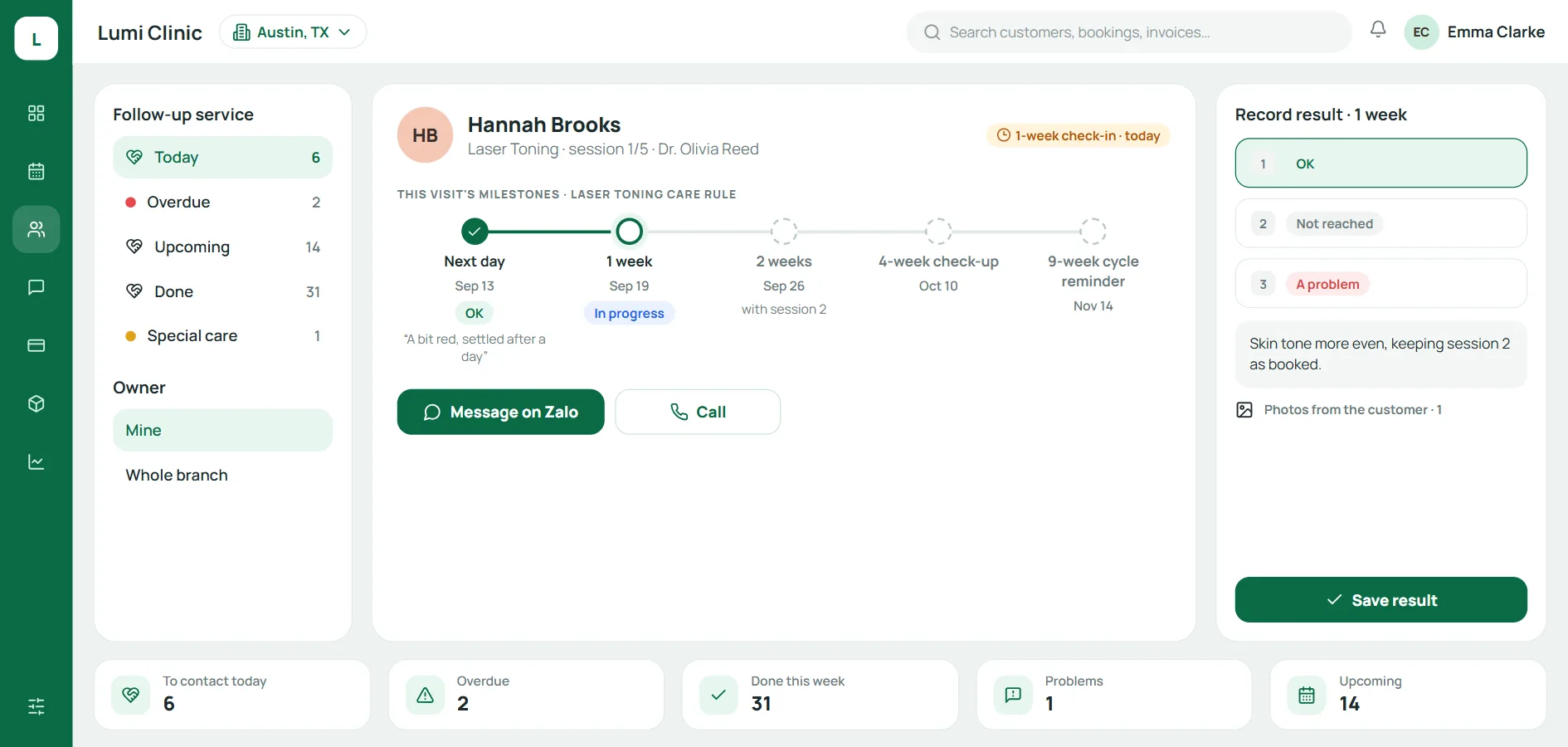
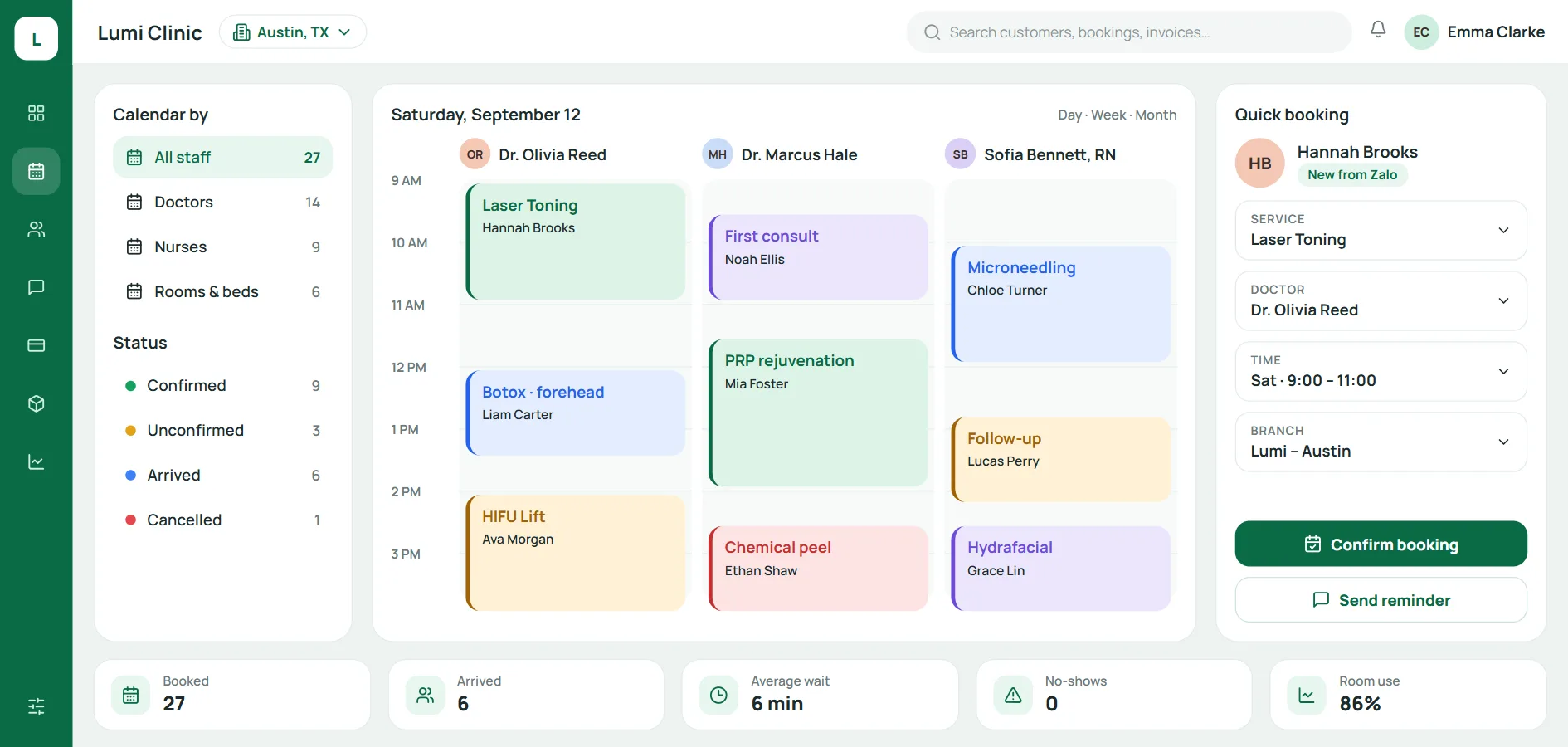
With Qub-X scheduling, rooms, beds, machines and staff share one calendar:
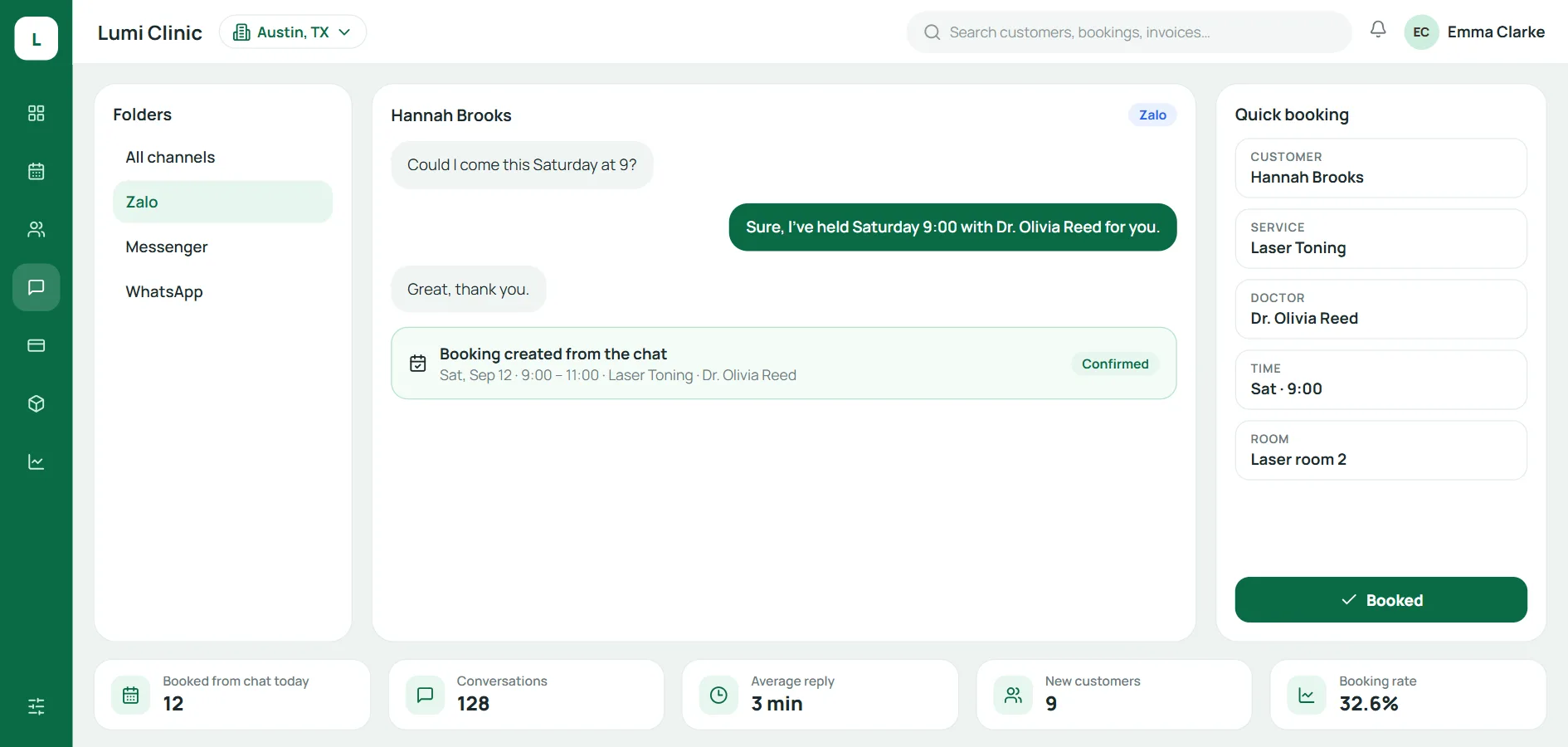
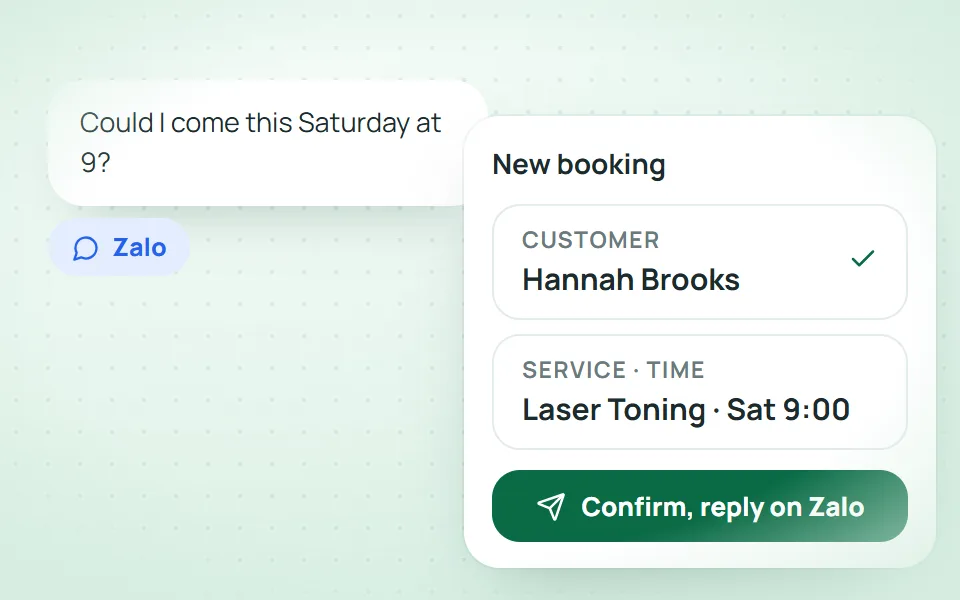
Consultants book right from the Zalo or Messenger inbox, and the confirmation goes back to the client via Zalo OA.
Clients who book online land straight on the appointment board as unconfirmed, so the front desk can call to confirm.
The front desk drags a booking to a new time and changes its status with one click; every change of time, staff or status goes into the change history.
Each completed service gets follow-up milestones by service group, up to the review visit and the cycle reminder.
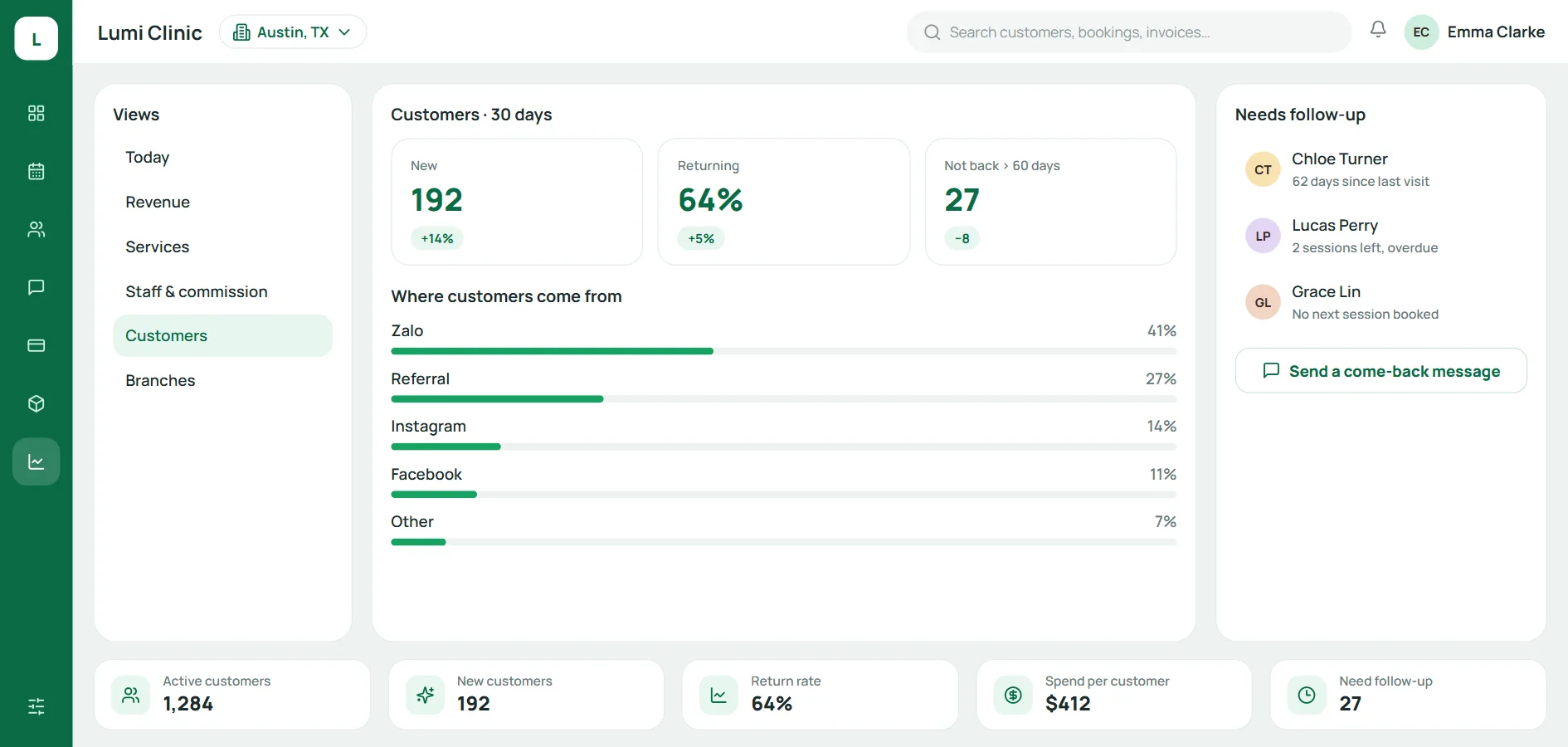
The customer report shows return and no-show rates, and appointments are counted by status: completed, cancelled, absent.
Qub-X runs at an aesthetic clinic chain with 3 branches, about 500 staff and more than 3,500 bookings a month.
Frequently asked questions
Should a spa take a deposit when clients book? Not for every client, as it can put new clients off. A deposit suits long services, peak slots or clients who have missed several appointments.
If a client paid a deposit and does not show, what happens? Follow what you agreed. Without another agreement, Vietnam's Civil Code 2015 lets the party holding the deposit keep it when the depositor backs out (Article 328).
Are reminders better by message or by phone? Messages suit most clients: you can send them in bulk and clients reply when convenient. Save calls for high-value services or clients who have not answered the confirmation.
How should we handle a client who cancels repeatedly? Record the cancellations on their profile, reconfirm more carefully before each booking and consider a deposit next time. Ask why; sometimes a different time slot is all it takes.
Conclusion
Separate cancellations with notice from no-shows, remind clients the day before and on the morning of the visit, and always give them an easy way to reschedule. Many clients miss appointments because they forget or feel awkward, not because they do not want to come. Book a Qub-X demo to see the shared calendar and booking inside the chat, or try it for 7 days.
Sources
Civil Code 2015 (Official Gazette) (in Vietnamese)
This article summarises regulations in force as of October 2026. It is for reference only and does not replace legal advice.
Related articles
All articles on Customer care- Customer care
Spa customer retention: 8 ways to bring clients back a second time
New clients take effort to find; returning clients are what build lasting revenue. Here is how to measure your return rate, a 30-day aftercare schedule and 8 things your spa should start doing now.
- Customer care
Multichannel inbox for spas: never miss a Zalo or Facebook message
A customer asks on Facebook, follows up on Zalo, then confirms the appointment on yet another channel. A multichannel inbox brings it all into one place, gives every conversation an owner and lets you measure response times.
- Security & compliance
E-prescribing in Vietnam: what clinics need to know about the National Prescription System
Since 1 January 2026, clinics in Vietnam must use e-prescribing, and some provincial Departments of Health are checking that prescriptions reach the national system. What aesthetic and dermatology clinics need to know about Circular 26/2025/TT-BYT, connection codes and ICD-10.