
E-prescribing in Vietnam: what clinics need to know about the National Prescription System
Since 1 January 2026, clinics in Vietnam must use e-prescribing, and some provincial Departments of Health are checking that prescriptions reach the national system. What aesthetic and dermatology clinics need to know about Circular 26/2025/TT-BYT, connection codes and ICD-10.
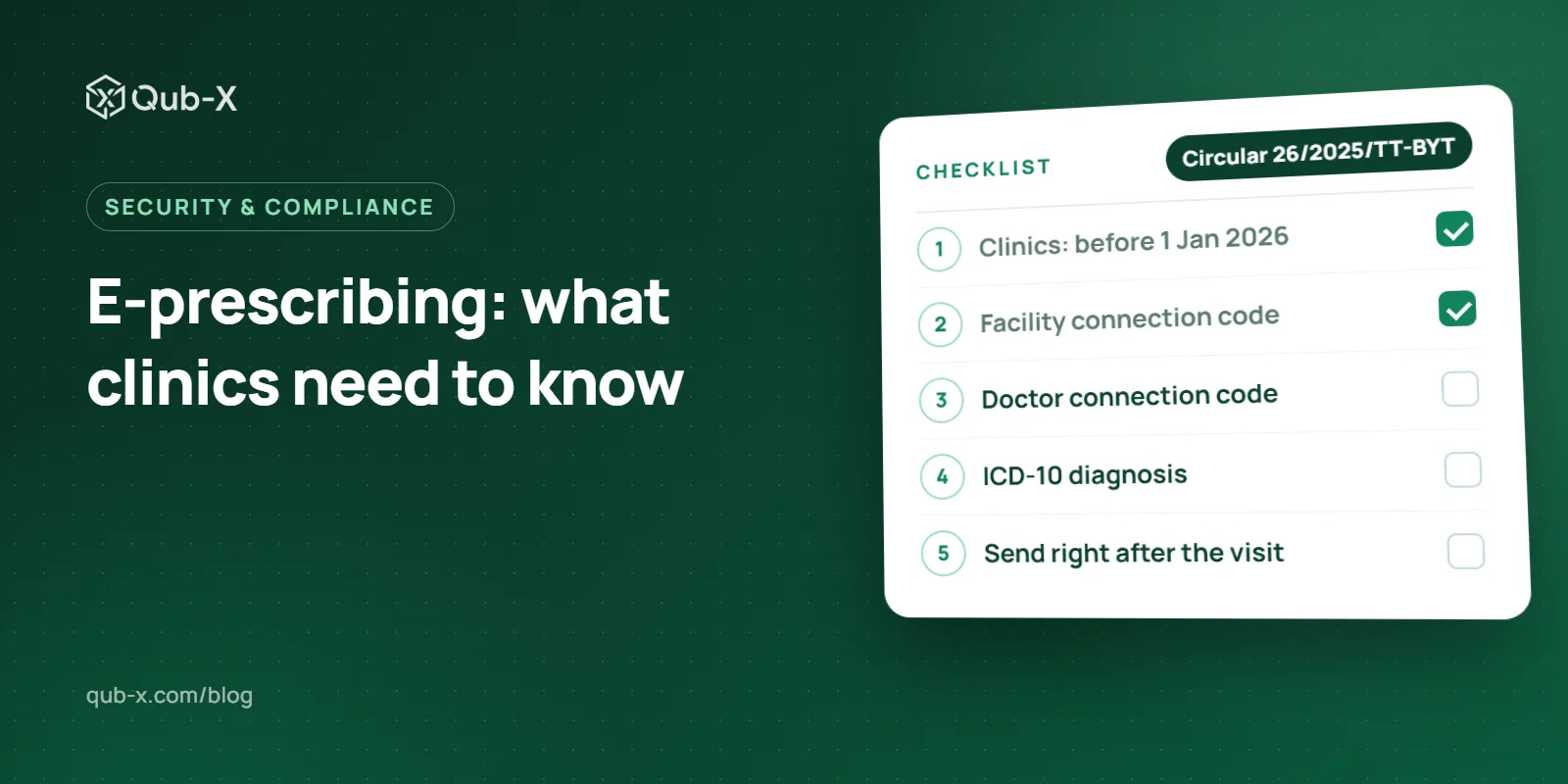
Since 1 January 2026, clinics in Vietnam that prescribe medicines to outpatients have had to issue electronic prescriptions, and some provincial Departments of Health are now checking whether those prescriptions reach the national system. Many aesthetic and dermatology clinic owners still see e-prescribing as a hospital matter. This article sums up the rules, how to get connection codes and what every prescription must contain. If your clinic is also preparing electronic medical records before the 31 December 2026 deadline, see our EMR implementation checklist.
What is e-prescribing?
Under Article 10 of the Ministry of Health's Circular 26/2025/TT-BYT (in Vietnamese), an electronic prescription is created, displayed, digitally signed, shared and stored by electronic means. It must contain all the information the Circular requires, and it carries the same legal weight as a paper prescription.
Unlike a handwritten one, every electronic prescription has a 14-character code in the format xxxxxyyyyyyy-z (note to the form in Appendix I):
The first 5 characters are the medical facility's code.
The next 7 are a random prescription code, unique within that facility.
The last character is the prescription type: N for narcotic drugs, H for psychotropic drugs and precursors, C for everything else.
The facility sends the prescription or its code to the patient electronically (Article 12, clause 6). The patient takes either one to a pharmacy, which looks up the code to dispense exactly what was prescribed, and can check their own prescription on donthuocquocgia.vn.
E-prescribing rules and the National Prescription System
Circular 26/2025/TT-BYT was issued on 30 June 2025 and took effect on 1 July 2025 (LuatVietnam). It governs how chemical drugs and biologics are prescribed in outpatient care (Article 1) and replaces Circulars 52/2017, 18/2018, 04/2022 and 27/2021 (Article 13, clause 2).
The e-prescribing timeline in Article 13, clause 3:
Facility type | Must e-prescribe |
|---|---|
Hospitals | Before 1 October 2025 |
Other medical facilities, including clinics | Before 1 January 2026 |
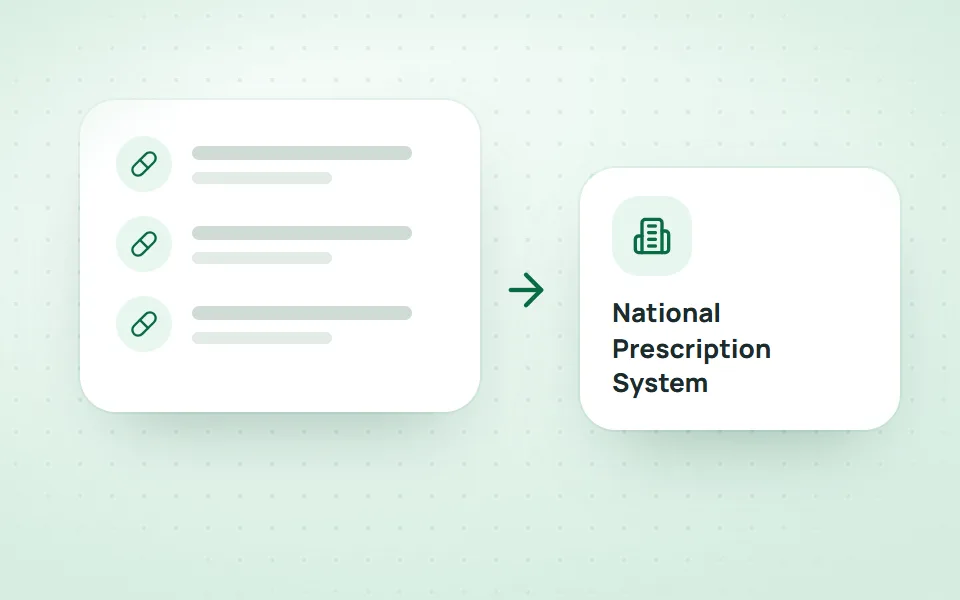
Prescribing on screen is only half the job. Article 12, clause 6 also requires facilities to keep their IT infrastructure up to the Ministry's technical criteria, send each electronic prescription to the National Prescription System as soon as the visit ends, store prescriptions and be able to retrieve the data when needed.
The Circular also points to the Law on Medical Examination and Treatment 2023: prescribing must follow Articles 62 and 63 of the Law (Article 4 of the Circular). Practitioners must prescribe promptly and accurately, take responsibility for their decisions, and match medicines to the diagnosis.
Do aesthetic and dermatology clinics have to connect?
Yes, if the clinic holds a medical operating licence and its doctors prescribe chemical drugs or biologics to outpatients. Circular 26 singles out only hospitals. Clinics fall under "other medical facilities", so their e-prescribing deadline was before 1 January 2026 and has passed. The duty to send prescriptions to the national system (Article 12, clause 6) applies to medical facilities, public or private.
Some Departments of Health are already following up:
Ho Chi Minh City: by 10 September 2025, 2,742 facilities had connection codes, but 1,667 of them had not yet sent any prescriptions; private facilities were told to register quickly (SGGP).
Tay Ninh: by mid-June 2026, 516 facilities had connection codes but only just over 230 were sending prescriptions; the department stepped up inspections and post-audits (Dai Bieu Nhan Dan).
Spas without a medical licence fall outside Circular 26. Within a clinic, only doctors and assistant physicians holding a practising certificate or licence may prescribe (Article 2). For your specific case, ask the Department of Health that issued your licence.
What to prepare: connection codes, doctor codes and ICD-10
Article 12, clause 5 of Circular 26 tasks provincial Departments of Health with issuing identification codes to facilities and practitioners through the National Prescription System. In the system, these are called connection codes.
The clinic's connection code
According to the National Prescription System user guide (section 5):
The clinic registers its details on donthuocquocgia.vn.
The application goes to the authority that issued the clinic's operating licence for approval; log in again after 3 to 5 days to check the result.
Once approved, the connection code appears in the account. Keep the code and password safe, as they go into your prescribing software.
Doctors' connection codes
Next, each doctor or assistant physician registers a prescriber account. The clinic approves it, then it goes to the authority that issued that person's practising certificate for a code.
Every prescription sent to the system must carry both the prescriber's and the facility's connection codes.
A doctor who works at several clinics uses one code and gives it to each clinic.
The clinic is responsible if it approves an account with wrong details.
When a doctor leaves, the clinic cancels their code in its software and updates the system (Medical Services Administration guidance).
ICD-10 diagnoses and what a prescription must show
The prescription form in Appendix I of Circular 26 has a diagnosis field. Under the data standard in Decision 808/QĐ-BYT, the diagnosis sent to the system includes the ICD-10 code and disease name. The list of conditions that may be prescribed for more than 30 days, in Appendix VII of Circular 26, is also coded in ICD-10. Doctors should therefore pick diagnoses from the ICD-10 list rather than type them freely.
Besides the diagnosis, a prescription needs:
The patient's personal ID, citizen ID or passport number if they have one, and their place of residence (Article 6, clauses 2 and 3).
Drug name, strength, dose, times per day, route, timing and number of days (Article 6, clause 6).
No more than 30 days per drug, or up to 90 days for conditions in Appendix VII (Article 6, clause 8).
To change a drug, the doctor issues a new prescription that replaces the old one (Article 6, clause 9).
Prescribing inside the Qub-X electronic medical record
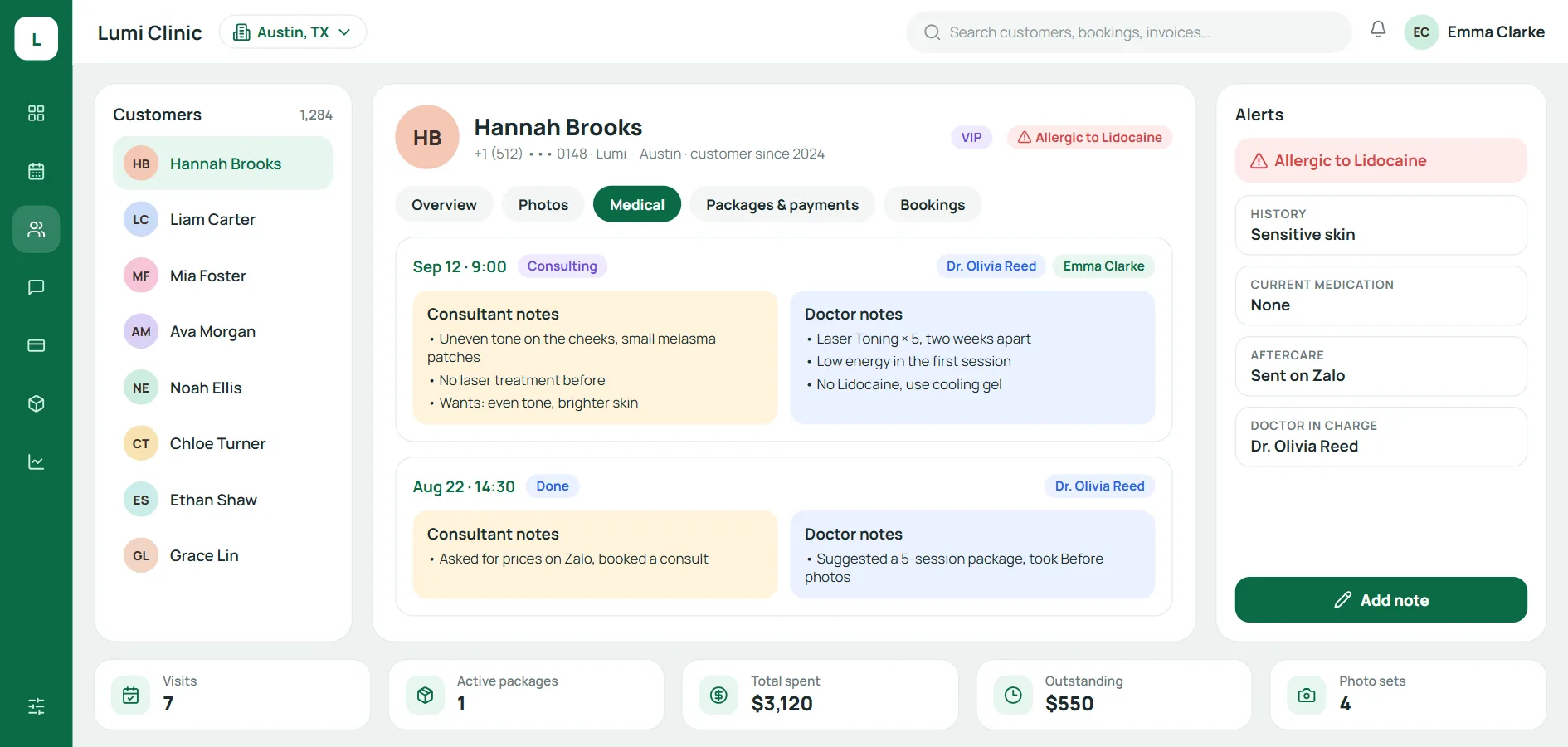
Qub-X is management software for spas, aesthetic clinics and dermatology clinics. In its EMR module, prescriptions sit right inside the visit:
Doctors prescribe from the ICD-10 diagnosis, with morning-to-night doses, days and advice, or start from a template for that diagnosis.
Allergy alerts appear at the top of the visit.
Each confirmed prescription has a code and a PDF.
Prescriptions are sent to the National Prescription System; the clinic enters its own connection code and each doctor's code only once.
The prescription, the 15/BV1 record, before and after photos and signed forms sit on the same visit.
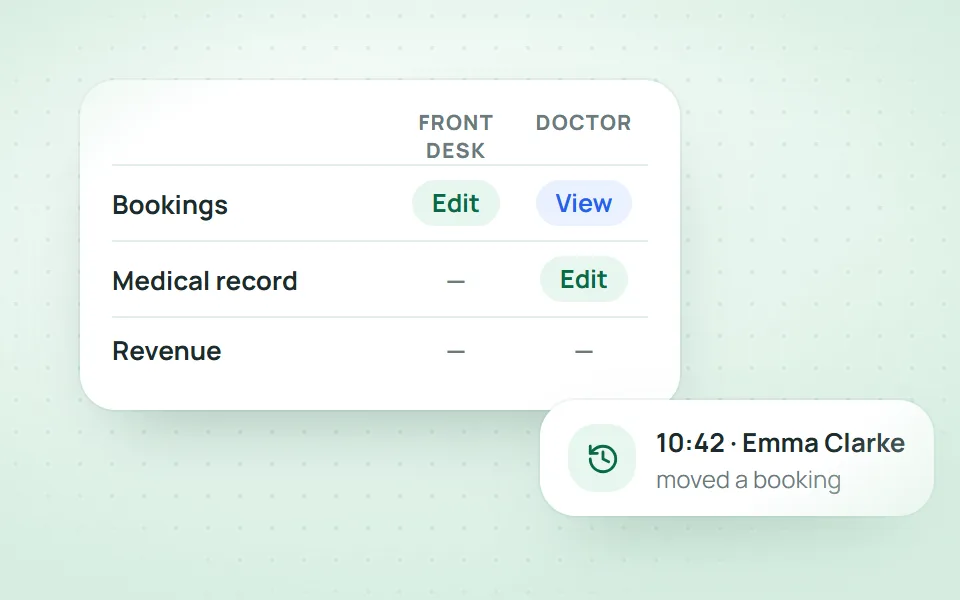
Each role sees only what it is granted, and every view, print and change to a record is logged.
The clinic and its doctors register for connection codes on donthuocquocgia.vn with the Department of Health, so do it early; once you have the codes, enter them in the software and prescriptions can be sent.
Qub-X runs at an aesthetic clinic chain with 3 branches, about 500 staff and 3,500+ bookings a month. Clinics can try it for 7 days with the Qub-X team.
Frequently asked questions
Does a small clinic with one doctor need e-prescribing? Yes, if it is licensed and prescribes chemical drugs or biologics to outpatients. Circular 26 set the deadline before 1 January 2026 for all facilities other than hospitals.
How do the clinic's and the doctor's connection codes differ? The facility code is issued to the clinic based on its operating licence; a doctor's code is issued to each prescriber based on their practising certificate. Every prescription needs both.
How is a wrong electronic prescription corrected? Under Article 6, clause 9 of Circular 26, the doctor issues a new prescription to replace the old one rather than editing it.
Does Qub-X send prescriptions to the National Prescription System? Yes. Qub-X is connected to the National Prescription System. The clinic enters its connection code and each doctor's code once, and prescriptions written on the medical record are then sent to the system.
Conclusion
E-prescribing has been mandatory for clinics since 1 January 2026: each prescription carries the facility's and the doctor's connection codes and goes to the national system as soon as the visit ends. Register for codes on donthuocquocgia.vn and record diagnoses consistently in ICD-10. Book a Qub-X demo to see prescribing inside the electronic medical record and sending to the national system, or try it for 7 days.
Sources
All sources are in Vietnamese.
Related articles
All articles on Security & compliance- Security & compliance
EMR implementation for aesthetic clinics: a checklist before 31 December 2026
Fewer than 8 weeks remain until 31 December 2026. This 6-step checklist covers EMR implementation for aesthetic and dermatology clinics under Circular 13/2025/TT-BYT, without pausing appointments.
- Security & compliance
EMR Software That Meets Vietnam Ministry of Health Standards
The 31 December 2026 deadline is close for every licensed clinic. This guide helps aesthetic and dermatology clinics understand what the Ministry of Health requires and choose EMR software that gets them there in time.
- Security & compliance
Customer data security for aesthetic clinics under the 2026 data law
From 1 January 2026, customers' health information, treatment photos and phone numbers are protected by the Law on Personal Data Protection. How should clinics obtain consent, are they exempt, how large are the fines, and what should they do first?